Word Explanation
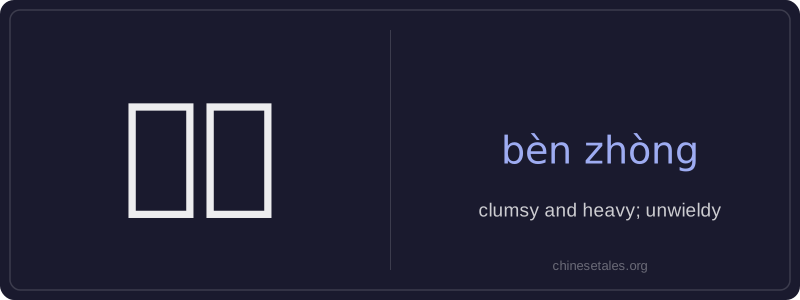
‘笨重’ is a compound adjective formed by combining ‘笨’ (bèn), meaning ‘clumsy’, ‘slow-witted’, or ‘awkward’, and ‘重’ (zhòng), meaning ‘heavy’ or ‘weighty’. Together, they describe something that is both physically heavy and difficult to handle or maneuver — often implying inefficiency, lack of grace, or poor design. It emphasizes not just weight, but the resulting awkwardness in movement or use.
The term is commonly used for large animals (e.g., elephants, rhinos, pandas), outdated machinery, bulky furniture, or outdated software interfaces. It carries a slightly negative connotation — suggesting impracticality or inconvenience — and is rarely used for people unless humorously or critically (e.g., describing someone’s slow, lumbering gait). It’s more frequent in descriptive or evaluative contexts than in casual speech, and typically modifies nouns directly (e.g., 笨重的机器, 笨重的行李).
Example Sentences
Related Words
国语
‘Guó yǔ’ literally means 'national language'—
面条
‘面条’ (miàn tiáo) literally means ‘flour str
无论谁
‘无论谁’ (wú lùn shéi) is a pronoun meaning
背后
背后 literally means 'back + behind' and functions
外语
‘外语’ literally means ‘outside language’ —
认同
‘认同’ (tóng rèn) is a verb meaning ‘to ident
中学
'Zhōngxué' literally combines 'zhōng' (middle)
认为
‘认为’ (rèn wéi) is a transitive verb meaning