Word Explanation
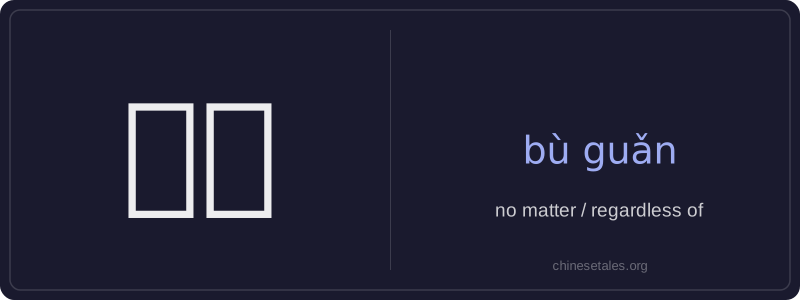
‘不管’ is a conjunction or adverb meaning ‘no matter’ or ‘regardless of’. Literally, ‘不’ means ‘not’, and ‘管’ means ‘to manage, control, or care about’—so together they express the idea of ‘not caring about’ or ‘not being limited by’ a certain condition. It introduces a clause that sets aside exceptions or variables, emphasizing that the main clause holds true under all circumstances.
This word commonly appears before nouns, pronouns, or clauses (often followed by ‘都’ or ‘也’ in the main clause) to signal universality or indifference to conditions—e.g., regardless of who, what, when, or how. It’s neutral in register and widely used in both spoken and written Chinese, especially in conditional or emphatic structures. Unlike ‘无论’, ‘不管’ feels slightly more colloquial and flexible in everyday speech.
Example Sentences
Related Words
国语
‘Guó yǔ’ literally means 'national language'—
面条
‘面条’ (miàn tiáo) literally means ‘flour str
无论谁
‘无论谁’ (wú lùn shéi) is a pronoun meaning
背后
背后 literally means 'back + behind' and functions
外语
‘外语’ literally means ‘outside language’ —
认同
‘认同’ (tóng rèn) is a verb meaning ‘to ident
中学
'Zhōngxué' literally combines 'zhōng' (middle)
认为
‘认为’ (rèn wéi) is a transitive verb meaning