Word Explanation
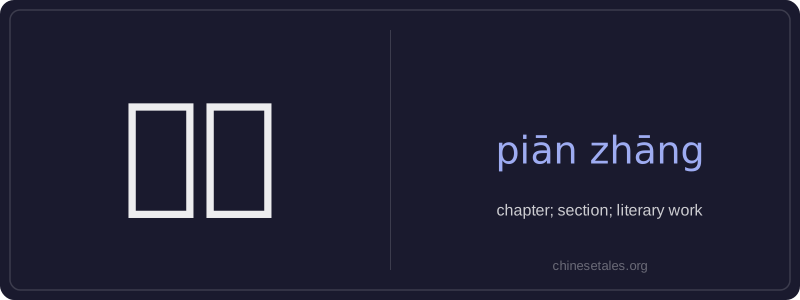
篇章 literally combines 篇 (piān), meaning 'a piece of writing' or 'chapter', and 章 (zhāng), meaning 'section' or 'stanza'. Together, 篇章 refers to a complete, self-contained unit of written text — such as a chapter in a book, a section of an essay, or even an entire literary work like a short story or formal article. It emphasizes structural integrity and coherence rather than just length.
This term is commonly used in academic, literary, and editorial contexts. You’ll encounter it when discussing composition, analyzing texts, or referring to published works in education or publishing. While it can occasionally refer to spoken discourse (e.g., a formal speech), it is overwhelmingly associated with written language and carries a formal, somewhat elevated register — it’s rarely used in casual conversation or for everyday documents like emails or notes.
Example Sentences
Related Words
国语
‘Guó yǔ’ literally means 'national language'—
面条
‘面条’ (miàn tiáo) literally means ‘flour str
无论谁
‘无论谁’ (wú lùn shéi) is a pronoun meaning
背后
背后 literally means 'back + behind' and functions
外语
‘外语’ literally means ‘outside language’ —
认同
‘认同’ (tóng rèn) is a verb meaning ‘to ident
中学
'Zhōngxué' literally combines 'zhōng' (middle)
认为
‘认为’ (rèn wéi) is a transitive verb meaning