Word Explanation
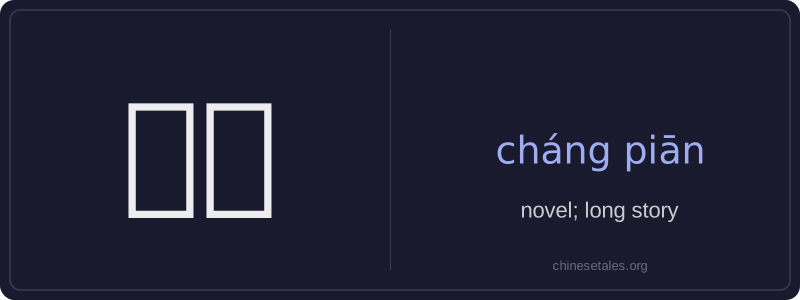
‘长篇’ literally means ‘long piece’—‘长’ (cháng) means ‘long’ or ‘extended’, and ‘篇’ (piān) is a measure word for written works like articles, essays, or stories. Together, they form a noun meaning ‘novel’ or ‘long story’, emphasizing length and narrative structure. It’s commonly used in literary contexts to distinguish full-length fiction from shorter forms like short stories (短篇) or novellas (中篇).
The term carries a neutral-to-formal register and appears frequently in book reviews, publishing discussions, and academic writing about literature. While it can technically refer to any long written work (e.g., a lengthy report), its dominant usage is literary—especially for novels. It’s rarely used for spoken narratives or oral storytelling, where terms like 故事 (gùshi) or 讲述 (jiǎngshù) are more natural.
Example Sentences
Related Words
国语
‘Guó yǔ’ literally means 'national language'—
面条
‘面条’ (miàn tiáo) literally means ‘flour str
无论谁
‘无论谁’ (wú lùn shéi) is a pronoun meaning
背后
背后 literally means 'back + behind' and functions
外语
‘外语’ literally means ‘outside language’ —
认同
‘认同’ (tóng rèn) is a verb meaning ‘to ident
中学
'Zhōngxué' literally combines 'zhōng' (middle)
认为
‘认为’ (rèn wéi) is a transitive verb meaning