Word Explanation
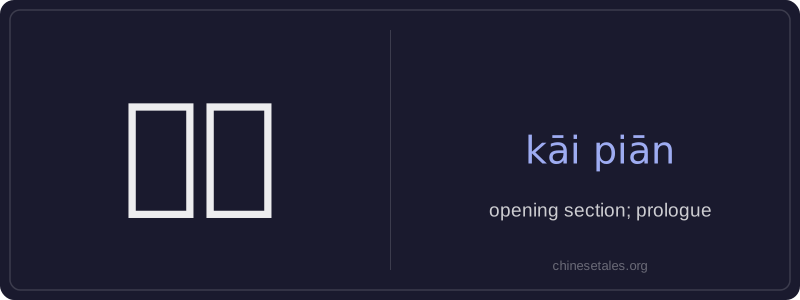
'Kāi piān' literally combines 'kāi' (to open) and 'piān' (a piece or section of writing), meaning the opening section of a written work—such as a book, article, speech, or essay. It functions as a formal, literary term that signals the beginning of a structured narrative or argument, often setting the tone, introducing key themes, or presenting an overview.
This word is commonly used in academic, journalistic, and literary contexts—not in casual conversation. You’ll find it in titles (e.g., '开篇语' — opening remarks), editorial notes, or when referring to how a text begins. Unlike more colloquial terms like '开头' (tóu kāi), '开篇' carries a refined, deliberate connotation: it implies intentionality and compositional design, not just chronological firstness. It’s rarely used for spoken introductions unless they’re highly scripted or ceremonial.
Example Sentences
Related Words
国语
‘Guó yǔ’ literally means 'national language'—
面条
‘面条’ (miàn tiáo) literally means ‘flour str
无论谁
‘无论谁’ (wú lùn shéi) is a pronoun meaning
背后
背后 literally means 'back + behind' and functions
外语
‘外语’ literally means ‘outside language’ —
认同
‘认同’ (tóng rèn) is a verb meaning ‘to ident
中学
'Zhōngxué' literally combines 'zhōng' (middle)
认为
‘认为’ (rèn wéi) is a transitive verb meaning