Word Explanation
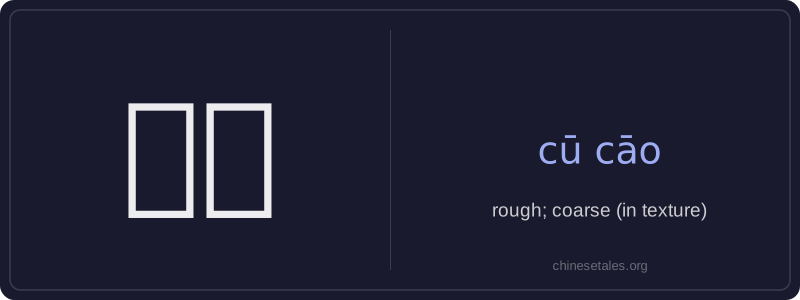
‘粗糙’ (cū cāo) is an adjective describing a physical texture that is uneven, rough, or coarse — like unpolished wood, sandpaper, or coarse fabric. Both characters contribute to this meaning: ‘粗’ (cū) conveys coarseness, thickness, or lack of refinement, while ‘糙’ (cāo) specifically emphasizes roughness in surface quality or graininess. Together, they reinforce each other, forming a common compound used almost exclusively for tactile descriptions.
The word often carries a neutral-to-slightly-negative connotation, suggesting something unfinished, low-quality, or lacking polish — for example, a handmade clay bowl with visible ridges, or hastily written handwriting. It’s rarely used metaphorically for abstract concepts (unlike ‘rough’ in English), and it doesn’t describe behavior or personality. You’ll hear it in contexts involving materials, craftsmanship, food texture (e.g., coarse-ground flour), or sensory evaluation — but not in emotional or social descriptions.
Example Sentences
Related Words
国语
‘Guó yǔ’ literally means 'national language'—
面条
‘面条’ (miàn tiáo) literally means ‘flour str
无论谁
‘无论谁’ (wú lùn shéi) is a pronoun meaning
背后
背后 literally means 'back + behind' and functions
外语
‘外语’ literally means ‘outside language’ —
认同
‘认同’ (tóng rèn) is a verb meaning ‘to ident
中学
'Zhōngxué' literally combines 'zhōng' (middle)
认为
‘认为’ (rèn wéi) is a transitive verb meaning