Word Explanation
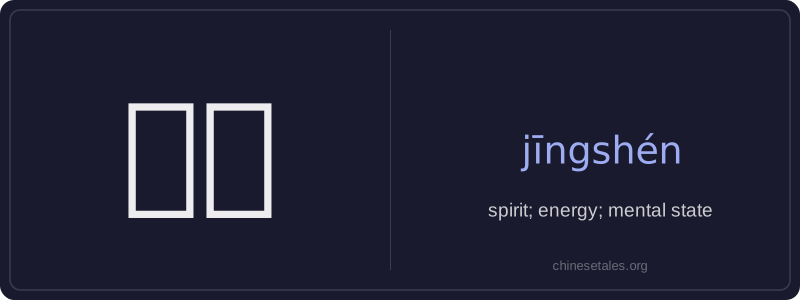
精神 (jīngshén) literally combines 精 (jīng), meaning 'essence' or 'refined energy', and 神 (shén), meaning 'spirit' or 'mind'. Together, they express the intangible inner force that sustains mental clarity, emotional resilience, and physical vitality. It’s more than just 'spirit' in a religious sense—it refers to one’s overall psychological and energetic state: alertness, morale, enthusiasm, or even willpower.
This word appears widely in daily speech, health discussions, and psychology. You might hear it describing someone’s demeanor ('He looks full of spirit'), a team’s morale ('The soldiers’ fighting spirit was high'), or medical conditions ('low energy' or 'mental fatigue'). Unlike English 'spirit', 精神 is rarely used for supernatural beings—those are usually 鬼 (guǐ) or 灵魂 (línghún). It carries strong connotations of human agency, focus, and inner strength, making it central to concepts like 精神健康 (mental health) and 精神压力 (psychological stress).
Example Sentences
Related Words
国语
‘Guó yǔ’ literally means 'national language'—
面条
‘面条’ (miàn tiáo) literally means ‘flour str
无论谁
‘无论谁’ (wú lùn shéi) is a pronoun meaning
背后
背后 literally means 'back + behind' and functions
外语
‘外语’ literally means ‘outside language’ —
认同
‘认同’ (tóng rèn) is a verb meaning ‘to ident
中学
'Zhōngxué' literally combines 'zhōng' (middle)
认为
‘认为’ (rèn wéi) is a transitive verb meaning