Word Explanation
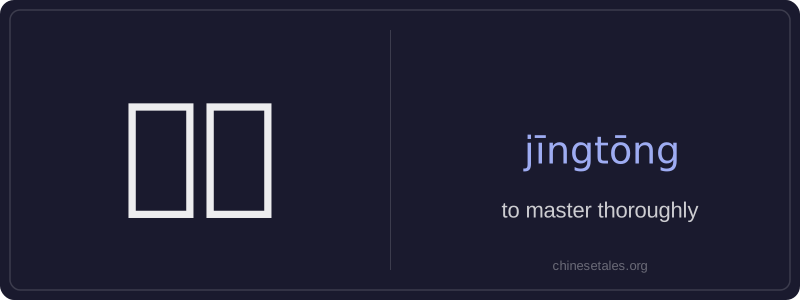
精通 (jīngtōng) is a verb meaning 'to master thoroughly' or 'to have expert-level command of' a skill, subject, or language. It combines 精 (jīng), meaning 'refined', 'essence', or 'expert', and 通 (tōng), meaning 'to understand fully', 'to be proficient in', or 'to have comprehensive knowledge'. Together, they convey deep, systematic mastery—not just familiarity or basic competence, but fluency and authoritative understanding.
This word is commonly used in formal or professional contexts: describing expertise in fields like programming, music, medicine, or languages. It often appears with the structure '精通 + [noun]', and typically requires an object—e.g., 精通英语 (master English), 精通钢琴 (master piano playing). Unlike casual terms like 会 (huì, 'can do') or 擅长 (shàncháng, 'be good at'), 精通 implies long-term study, practice, and recognized proficiency.
Example Sentences
Related Words
国语
‘Guó yǔ’ literally means 'national language'—
面条
‘面条’ (miàn tiáo) literally means ‘flour str
无论谁
‘无论谁’ (wú lùn shéi) is a pronoun meaning
背后
背后 literally means 'back + behind' and functions
外语
‘外语’ literally means ‘outside language’ —
认同
‘认同’ (tóng rèn) is a verb meaning ‘to ident
中学
'Zhōngxué' literally combines 'zhōng' (middle)
认为
‘认为’ (rèn wéi) is a transitive verb meaning