Word Explanation
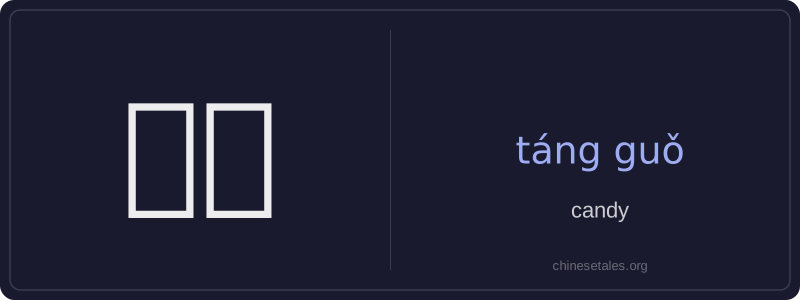
‘糖果’ (táng guǒ) literally means ‘sugar fruit’, but in modern Chinese it refers specifically to confectionery — small, sweet treats made primarily from sugar, syrup, or chocolate, often wrapped individually. The first character 糖 (táng) means ‘sugar’ and signals the sweet, sugary nature of the item; the second character 果 (guǒ), while normally meaning ‘fruit’ or ‘fruit-like object’, here functions more as a generic classifier for small, bite-sized edible items — a common pattern in compound nouns (e.g., 花果 huāguǒ ‘flowers and fruits’, but also used broadly in food names). Unlike English ‘candy’, which may imply hard sweets or chewy varieties, 糖果 is an umbrella term covering chocolates, lollipops, gummies, mints, and even some traditional Chinese sweets like nougat or malt candies.
This word is commonly used in everyday contexts: shopping, gift-giving (especially during festivals or to children), and describing snacks. It’s neutral in register — appropriate for both spoken and written Chinese — and appears frequently in advertisements, packaging, and parenting discussions about moderation and dental health.
Example Sentences
Related Words
国语
‘Guó yǔ’ literally means 'national language'—
面条
‘面条’ (miàn tiáo) literally means ‘flour str
无论谁
‘无论谁’ (wú lùn shéi) is a pronoun meaning
背后
背后 literally means 'back + behind' and functions
外语
‘外语’ literally means ‘outside language’ —
认同
‘认同’ (tóng rèn) is a verb meaning ‘to ident
中学
'Zhōngxué' literally combines 'zhōng' (middle)
认为
‘认为’ (rèn wéi) is a transitive verb meaning