Word Explanation
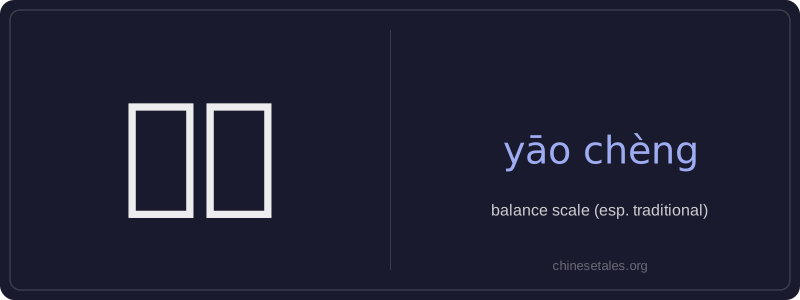
‘约秤’ (yāo chèng) is a traditional Chinese balance scale used primarily for weighing livestock, poultry, or other animals before sale or slaughter. The character ‘约’ (yāo) here is an archaic or dialectal variant of ‘秤’ itself—though historically it may derive from ‘约’ meaning ‘to weigh’ in certain regional usages—and ‘秤’ (chèng) means ‘scale’ or ‘balance’. Together, the term specifically denotes a hanging beam scale with a hook or sling for suspending animals, commonly seen in rural markets, farms, and abattoirs across China.
This tool differs from modern digital scales or platform scales: it relies on counterweights and manual balancing, requiring skill to read accurately. While increasingly rare in urban settings, the 约秤 remains culturally evocative of traditional agricultural trade practices and appears frequently in literature, documentaries, and oral histories about farming life. Its use implies hands-on, localized commerce rather than industrial processing.
Example Sentences
Related Words
国语
‘Guó yǔ’ literally means 'national language'—
面条
‘面条’ (miàn tiáo) literally means ‘flour str
无论谁
‘无论谁’ (wú lùn shéi) is a pronoun meaning
背后
背后 literally means 'back + behind' and functions
外语
‘外语’ literally means ‘outside language’ —
认同
‘认同’ (tóng rèn) is a verb meaning ‘to ident
中学
'Zhōngxué' literally combines 'zhōng' (middle)
认为
‘认为’ (rèn wéi) is a transitive verb meaning