Word Explanation
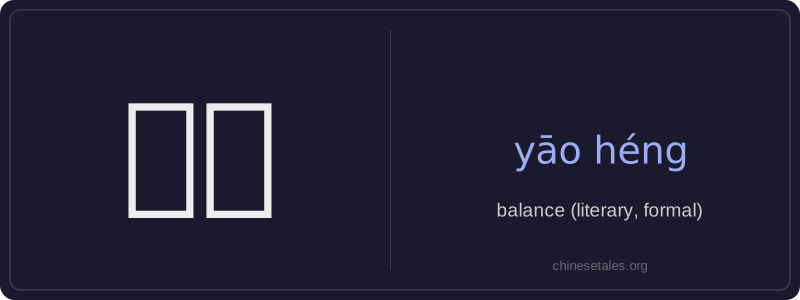
约衡 (yāo héng) is a formal, literary term meaning 'balance' or 'equilibrium', often used in classical or philosophical contexts to describe a state of harmonious proportion—especially between opposing forces or natural elements. The character 约 (yāo) carries connotations of 'to bind', 'to regulate', or 'to constrain', while 衡 (héng) means 'balance', 'scale', or 'standard'—as in the ancient weighing device. Together, they evoke the idea of balance achieved through conscious regulation or mutual restraint.
This term appears rarely in modern spoken Chinese but surfaces in written discourse on ecology, traditional medicine, Daoist philosophy, and conservation biology—particularly when discussing the delicate equilibrium within ecosystems. It is never used for simple physical weighing or everyday fairness; instead, it implies a deeper, dynamic, and often fragile harmony sustained by interdependence.
Example Sentences
Related Words
国语
‘Guó yǔ’ literally means 'national language'—
面条
‘面条’ (miàn tiáo) literally means ‘flour str
无论谁
‘无论谁’ (wú lùn shéi) is a pronoun meaning
背后
背后 literally means 'back + behind' and functions
外语
‘外语’ literally means ‘outside language’ —
认同
‘认同’ (tóng rèn) is a verb meaning ‘to ident
中学
'Zhōngxué' literally combines 'zhōng' (middle)
认为
‘认为’ (rèn wéi) is a transitive verb meaning