Word Explanation
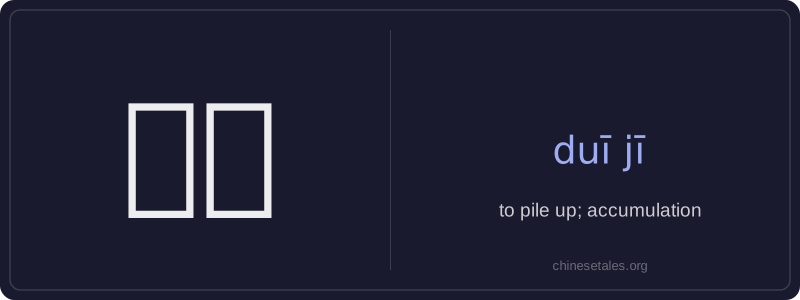
堆积 is a verb meaning 'to pile up' or 'to accumulate', often implying an unplanned, gradual, or excessive buildup of things—whether physical objects (like papers, snow, or waste) or abstract elements (like problems, stress, or data). The character 堆 means 'pile' or 'heap', suggesting a visible, layered mass; 积 means 'to accumulate' or 'to gather over time', emphasizing gradual collection. Together, they form a compound that stresses both the physical arrangement and the temporal process of accumulation.
This word is commonly used in everyday contexts involving clutter, storage issues, environmental concerns (e.g., plastic waste), or even figurative situations like emotional burdens or bureaucratic delays. It carries a slightly negative connotation—suggesting disorder, inefficiency, or neglect—unless softened by context (e.g., 'snow accumulating naturally'). It’s often followed by a noun object and can appear in both active and passive constructions (e.g., '垃圾堆积' or '问题被不断堆积').
Example Sentences
Related Words
国语
‘Guó yǔ’ literally means 'national language'—
无论谁
‘无论谁’ (wú lùn shéi) is a pronoun meaning
外语
‘外语’ literally means ‘outside language’ —
面条
‘面条’ (miàn tiáo) literally means ‘flour str
不对
不对 (bù duì) literally combines 不 (bù), meani
认为
‘认为’ (rèn wéi) is a transitive verb meaning
认同
‘认同’ (tóng rèn) is a verb meaning ‘to ident
中学
'Zhōngxué' literally combines 'zhōng' (middle)