Word Explanation
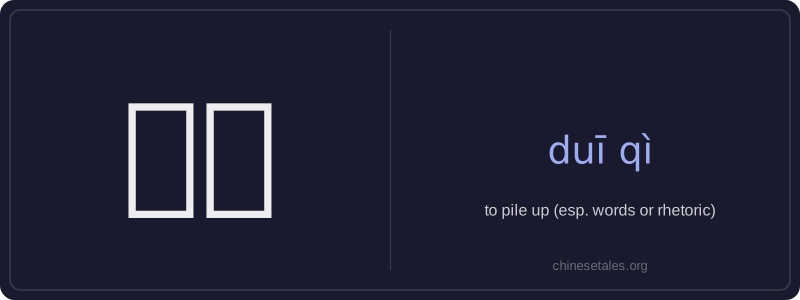
'堆砌' literally combines 'duī' (to pile up, heap) and 'qì' (to lay bricks or stones, to build), together evoking the image of stacking materials haphazardly or excessively. As a verb, it describes the act of piling up words, phrases, rhetorical devices, or decorative elements in writing or speech—often with the implication of artificiality, redundancy, or lack of natural flow.
This term is commonly used in literary criticism, language teaching, and stylistic analysis to point out overly ornate, verbose, or mechanically assembled expression. It carries a mildly negative connotation, suggesting that content sacrifices clarity and sincerity for showy density. While it can occasionally describe physical stacking in technical or poetic contexts, its dominant modern usage is figurative—referring to linguistic or stylistic accumulation rather than material construction.
Example Sentences
Related Words
国语
‘Guó yǔ’ literally means 'national language'—
无论谁
‘无论谁’ (wú lùn shéi) is a pronoun meaning
外语
‘外语’ literally means ‘outside language’ —
面条
‘面条’ (miàn tiáo) literally means ‘flour str
不对
不对 (bù duì) literally combines 不 (bù), meani
认为
‘认为’ (rèn wéi) is a transitive verb meaning
认同
‘认同’ (tóng rèn) is a verb meaning ‘to ident
中学
'Zhōngxué' literally combines 'zhōng' (middle)