Word Explanation
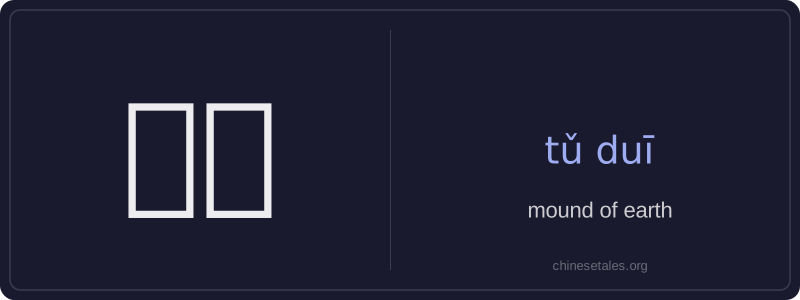
‘土堆’ literally combines ‘土’ (tǔ), meaning ‘earth’ or ‘soil’, and ‘堆’ (duī), meaning ‘pile’ or ‘mound’. Together, they refer to a small, naturally or artificially formed accumulation of earth — typically low, rounded, and unstructured, like one you might see beside a construction site, in a field after digging, or left by burrowing animals. It’s more specific than the general word ‘堆’ and emphasizes the material (earth) rather than just the shape.
This word is neutral in register and commonly used in descriptive, everyday speech and writing — especially when referring to physical features in rural or outdoor settings. Unlike formal terms like ‘丘’ (hill) or ‘山’ (mountain), ‘土堆’ implies modest size and informality. It rarely appears in abstract or metaphorical contexts; its usage stays grounded in tangible, visible earth formations.
Example Sentences
Related Words
国语
‘Guó yǔ’ literally means 'national language'—
无论谁
‘无论谁’ (wú lùn shéi) is a pronoun meaning
外语
‘外语’ literally means ‘outside language’ —
面条
‘面条’ (miàn tiáo) literally means ‘flour str
不对
不对 (bù duì) literally combines 不 (bù), meani
认为
‘认为’ (rèn wéi) is a transitive verb meaning
认同
‘认同’ (tóng rèn) is a verb meaning ‘to ident
中学
'Zhōngxué' literally combines 'zhōng' (middle)