Word Explanation
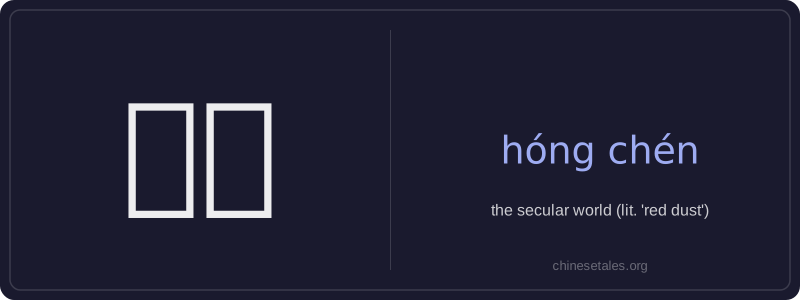
‘Red dust’ (hóng chén) is a poetic, classical Chinese metaphor for the bustling, transient, and often distracting secular world — especially its materialism, desires, and mundane concerns. Literally, ‘red’ evokes color, vitality, passion, and sometimes danger or chaos; ‘dust’ suggests impermanence, obscurity, and the ordinary particles stirred up by human activity. Together, they paint a vivid image of worldly life: crowded, fleeting, emotionally charged, and spiritually entangling.
The term appears frequently in Daoist and Buddhist texts to contrast earthly existence with spiritual liberation or quiet retreat. Modern usage retains this philosophical weight but also appears in literature, songs, and everyday speech to express weariness with social pressures, longing for simplicity, or reflection on life’s impermanence. It carries gentle melancholy and wisdom rather than negativity — not ‘the real world’ in a neutral sense, but ‘the world of attachment and change.’
Example Sentences
Related Words
国语
‘Guó yǔ’ literally means 'national language'—
无论谁
‘无论谁’ (wú lùn shéi) is a pronoun meaning
外语
‘外语’ literally means ‘outside language’ —
面条
‘面条’ (miàn tiáo) literally means ‘flour str
不对
不对 (bù duì) literally combines 不 (bù), meani
认为
‘认为’ (rèn wéi) is a transitive verb meaning
认同
‘认同’ (tóng rèn) is a verb meaning ‘to ident
中学
'Zhōngxué' literally combines 'zhōng' (middle)