Word Explanation
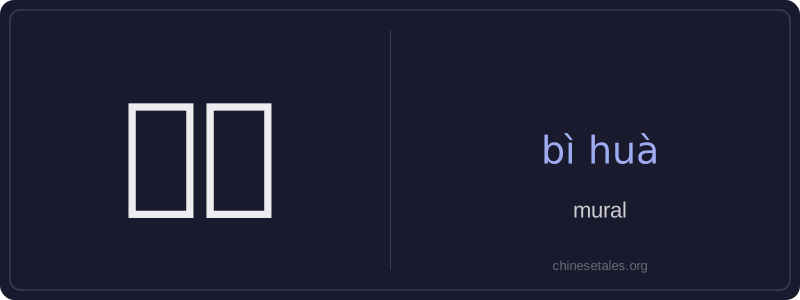
壁画 (bì huà) literally means 'wall painting' — 壁 (bì) means 'wall' or 'cliff', and 画 (huà) means 'painting' or 'picture'. Together, they refer to a large-scale artwork painted or applied directly onto a wall, ceiling, or other permanent surface. Murals are commonly found in temples, caves, palaces, public buildings, and modern urban spaces — from ancient Dunhuang Buddhist cave paintings to contemporary street art.
Unlike portable paintings on paper or silk, murals are site-specific and often created for decorative, religious, historical, or social purposes. They may be made using fresco, tempera, mosaic, or spray paint techniques. In Chinese cultural contexts, traditional murals frequently depict mythological figures, historical scenes, landscapes, or auspicious animals like dragons and phoenixes — blending artistic expression with storytelling and spiritual meaning.
Example Sentences
Related Words
国语
‘Guó yǔ’ literally means 'national language'—
无论谁
‘无论谁’ (wú lùn shéi) is a pronoun meaning
外语
‘外语’ literally means ‘outside language’ —
面条
‘面条’ (miàn tiáo) literally means ‘flour str
不对
不对 (bù duì) literally combines 不 (bù), meani
认为
‘认为’ (rèn wéi) is a transitive verb meaning
认同
‘认同’ (tóng rèn) is a verb meaning ‘to ident
中学
'Zhōngxué' literally combines 'zhōng' (middle)