Word Explanation
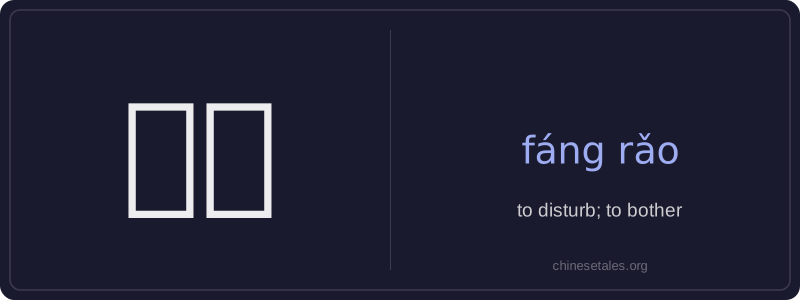
妨扰 is a formal, written verb meaning 'to disturb' or 'to bother', often implying an unwelcome interruption of someone’s peace, work, or rest. The character 妨 (fáng) means 'to hinder' or 'to impede', while 扰 (rǎo) means 'to disturb' or 'to trouble'; together, they reinforce each other to express a clear, slightly elevated sense of disruption. It is commonly used in official notices, polite requests, or literary contexts — for example, on signs asking people not to disturb others in quiet zones.
This word carries a tone of respect and restraint; it’s rarely used in casual speech among friends, where simpler terms like 打扰 (dǎ rǎo) or 影响 (yǐng xiǎng) are preferred. 妨扰 emphasizes the negative impact of an action on another person’s state or activity, and it frequently appears in passive or prohibitive constructions (e.g., '请勿妨扰'). Its formality makes it unsuitable for informal chats but appropriate in workplace communications, hospital signage, or academic settings.
Example Sentences
Related Words
国语
‘Guó yǔ’ literally means 'national language'—
无论谁
‘无论谁’ (wú lùn shéi) is a pronoun meaning
外语
‘外语’ literally means ‘outside language’ —
面条
‘面条’ (miàn tiáo) literally means ‘flour str
不对
不对 (bù duì) literally combines 不 (bù), meani
认为
‘认为’ (rèn wéi) is a transitive verb meaning
认同
‘认同’ (tóng rèn) is a verb meaning ‘to ident
中学
'Zhōngxué' literally combines 'zhōng' (middle)