Word Explanation
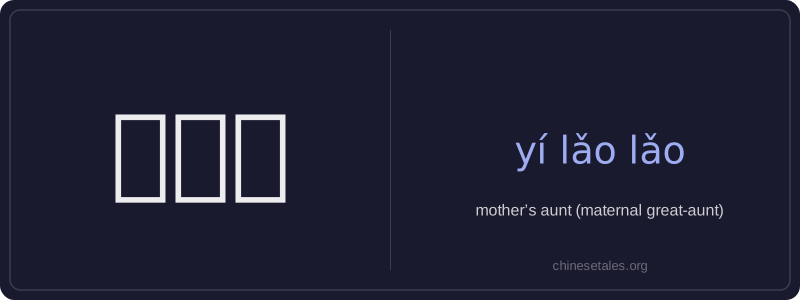
‘姨姥姥’ (yí lǎo lǎo) is a kinship term used specifically for one’s mother’s aunt — that is, the sister of one’s maternal grandmother. It combines three characters: ‘姨’ (yí), meaning ‘aunt’ (specifically mother’s sister); and ‘姥姥’ (lǎo lǎo), the common term for ‘maternal grandmother’. Repeating ‘姥’ emphasizes generational distance, making it clear this person is one generation older than the grandmother — hence, the grandmother’s sister. This term reflects Chinese kinship’s precision in distinguishing maternal versus paternal lines and generational levels.
The word is used almost exclusively in spoken, informal family contexts — especially by children or younger relatives when addressing or referring to this elder. It carries warmth and respect but is not formal or bureaucratic; you won’t find it in legal documents or official forms. Unlike English, which often uses generic terms like ‘great-aunt’, Chinese requires specifying the exact lineage (maternal/paternal) and immediate familial relationship, making ‘姨姥姥’ both precise and culturally rich.
Example Sentences
Related Words
国语
‘Guó yǔ’ literally means 'national language'—
无论谁
‘无论谁’ (wú lùn shéi) is a pronoun meaning
外语
‘外语’ literally means ‘outside language’ —
面条
‘面条’ (miàn tiáo) literally means ‘flour str
不对
不对 (bù duì) literally combines 不 (bù), meani
认为
‘认为’ (rèn wéi) is a transitive verb meaning
认同
‘认同’ (tóng rèn) is a verb meaning ‘to ident
中学
'Zhōngxué' literally combines 'zhōng' (middle)