Word Explanation
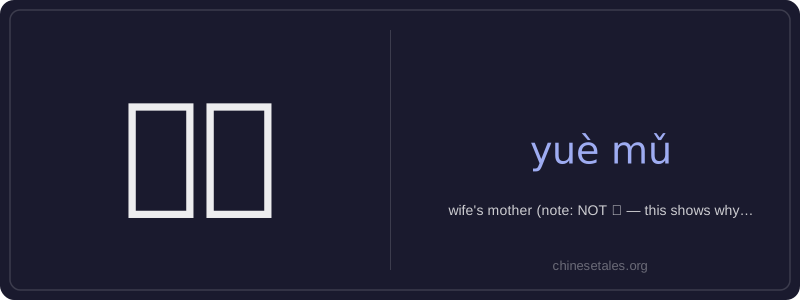
‘岳母’ (yuè mǔ) is a formal, respectful term for one’s wife’s mother — equivalent to ‘mother-in-law’ in English, specifically on the wife’s side. The character 岳 (yuè) originally refers to a revered mountain (especially Mount Tai, symbolizing dignity and stability), and historically came to denote the father-in-law (岳父) or mother-in-law (岳母) by extension — evoking respect and solemnity. The character 母 (mǔ) means ‘mother’. Together, 岳母 carries cultural weight: it signals familial role, social hierarchy, and proper etiquette in traditional and modern Chinese families.
This term is used in both spoken and written contexts when referring to or addressing the wife’s mother — especially in formal settings, introductions, or when showing deference. It is not interchangeable with 娘 (niáng), which means ‘mother’ but is informal, intimate, and used only for one’s own biological mother. Confusing 岳母 with 娘 is a common error among learners, as both contain ‘mother’, but their kinship roles and social registers are entirely distinct.
Example Sentences
Related Words
国语
‘Guó yǔ’ literally means 'national language'—
无论谁
‘无论谁’ (wú lùn shéi) is a pronoun meaning
外语
‘外语’ literally means ‘outside language’ —
面条
‘面条’ (miàn tiáo) literally means ‘flour str
不对
不对 (bù duì) literally combines 不 (bù), meani
认为
‘认为’ (rèn wéi) is a transitive verb meaning
认同
‘认同’ (tóng rèn) is a verb meaning ‘to ident
中学
'Zhōngxué' literally combines 'zhōng' (middle)