Word Explanation
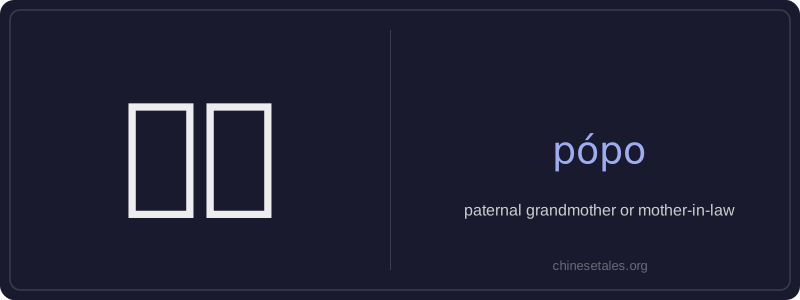
‘婆婆’ (pópo) is a kinship term with two distinct but context-dependent meanings: it most commonly refers to one’s paternal grandmother — the mother of one’s father — especially in northern and central China. Less frequently, it can mean ‘mother-in-law’, particularly when used by a daughter-in-law speaking about her husband’s mother; however, in this sense, regional usage varies, and many speakers prefer ‘公公婆婆’ (gōnggong pópo) for ‘father-in-law and mother-in-law’ collectively, or use ‘婆婆’ alone only after establishing context.
The repetition of ‘婆’ emphasizes familiarity and affection, similar to other reduplicated kinship terms like ‘爷爷’ (yéye) or ‘奶奶’ (nǎinai). Though both characters mean ‘old woman’ or ‘matron’, together they form a specific familial title rather than a literal description. Tone is always high-level (first tone) on both syllables, and mispronouncing either as second or third tone changes the word entirely (e.g., ‘pópo’ ≠ ‘pópo’ with different tones).
Example Sentences
Related Words
国语
‘Guó yǔ’ literally means 'national language'—
无论谁
‘无论谁’ (wú lùn shéi) is a pronoun meaning
外语
‘外语’ literally means ‘outside language’ —
面条
‘面条’ (miàn tiáo) literally means ‘flour str
不对
不对 (bù duì) literally combines 不 (bù), meani
认为
‘认为’ (rèn wéi) is a transitive verb meaning
认同
‘认同’ (tóng rèn) is a verb meaning ‘to ident
中学
'Zhōngxué' literally combines 'zhōng' (middle)