Word Explanation
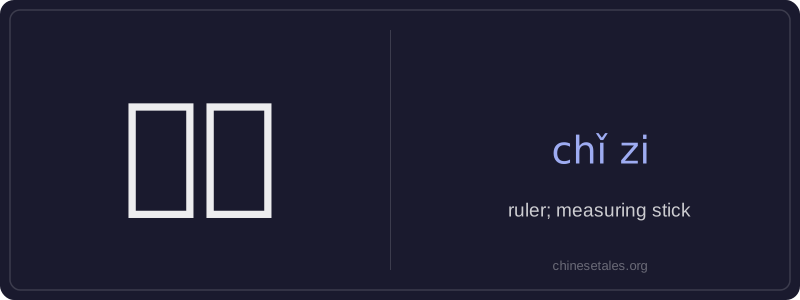
尺子 (chǐ zi) is a common noun meaning 'ruler' or 'measuring stick' — a straight tool marked with units (usually centimeters and inches) used to measure length or draw straight lines. The first character, 尺 (chǐ), originally referred to an ancient Chinese unit of length (about 33 cm), and now also denotes rulers in general; the second character, 子 (zi), is a neutral diminutive suffix often attached to nouns to form concrete, everyday objects (like 桌子 zhuōzi 'table' or 筷子 kuàizi 'chopsticks'). Together, 尺子 emphasizes a physical, handheld measuring instrument rather than abstract measurement.
This word appears frequently in school, office, and craft settings — students use it for geometry homework, carpenters rely on longer versions, and artists select transparent plastic ones for precision. While 尺 alone can mean 'a unit of length' or be used in formal/technical contexts (e.g., 一尺 yī chǐ 'one chi'), 尺子 specifically refers to the object itself. It’s colloquial, universally understood, and never used metaphorically.
Example Sentences
Related Words
国语
‘Guó yǔ’ literally means 'national language'—
无论谁
‘无论谁’ (wú lùn shéi) is a pronoun meaning
外语
‘外语’ literally means ‘outside language’ —
面条
‘面条’ (miàn tiáo) literally means ‘flour str
不对
不对 (bù duì) literally combines 不 (bù), meani
认为
‘认为’ (rèn wéi) is a transitive verb meaning
认同
‘认同’ (tóng rèn) is a verb meaning ‘to ident
中学
'Zhōngxué' literally combines 'zhōng' (middle)