Word Explanation
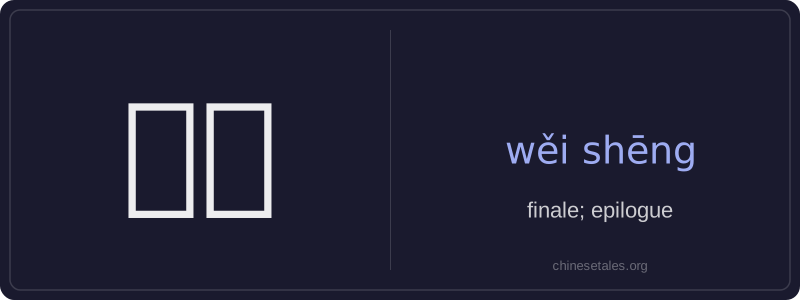
'尾声' literally combines '尾' (wěi), meaning 'tail' or 'end', and '声' (shēng), meaning 'sound' or 'voice'. Together, it evokes the image of the final sounds or concluding notes—hence its primary meaning: the closing part of a performance, story, event, or process. It carries a literary, slightly formal tone and is commonly used in discussions of music, theater, film, literature, and even historical or social developments.
While '尾' alone can refer to animal tails (linking it to the Animals topic), '尾声' is metaphorical—it doesn’t describe physical anatomy but rather structure and timing. You’ll hear it in phrases like '演出的尾声' (the finale of a performance) or '改革的尾声' (the concluding phase of reforms). Unlike colloquial terms like '结尾', '尾声' suggests elegance, reflection, and often emotional resonance—implying not just an end, but a meaningful, resonant close.
Example Sentences
Related Words
国语
‘Guó yǔ’ literally means 'national language'—
无论谁
‘无论谁’ (wú lùn shéi) is a pronoun meaning
外语
‘外语’ literally means ‘outside language’ —
面条
‘面条’ (miàn tiáo) literally means ‘flour str
不对
不对 (bù duì) literally combines 不 (bù), meani
认为
‘认为’ (rèn wéi) is a transitive verb meaning
认同
‘认同’ (tóng rèn) is a verb meaning ‘to ident
中学
'Zhōngxué' literally combines 'zhōng' (middle)