Word Explanation
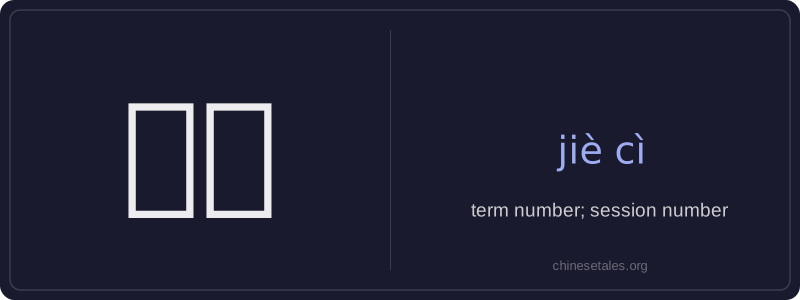
届次 (jiè cì) is a compound noun meaning 'term number' or 'session number'. It combines 届 (jiè), which refers to a fixed period—especially in formal contexts like academic years, political terms, or conference cycles—and 次 (cì), meaning 'time', 'instance', or 'occurrence'. Together, they denote the ordinal count of such a recurring event or period: for example, the 14th National People’s Congress is the 14th 届次 of that body.
This term is highly formal and institutional. It appears frequently in official documents, news reports about elections or conferences, university academic calendars, and historical records. It is rarely used in casual speech. Unlike general counting words like 次, 届次 always implies a scheduled, numbered cycle with clear beginnings and endings—never an informal or one-off occurrence.
Example Sentences
Related Words
国语
‘Guó yǔ’ literally means 'national language'—
无论谁
‘无论谁’ (wú lùn shéi) is a pronoun meaning
外语
‘外语’ literally means ‘outside language’ —
面条
‘面条’ (miàn tiáo) literally means ‘flour str
不对
不对 (bù duì) literally combines 不 (bù), meani
认为
‘认为’ (rèn wéi) is a transitive verb meaning
认同
‘认同’ (tóng rèn) is a verb meaning ‘to ident
中学
'Zhōngxué' literally combines 'zhōng' (middle)