Word Explanation
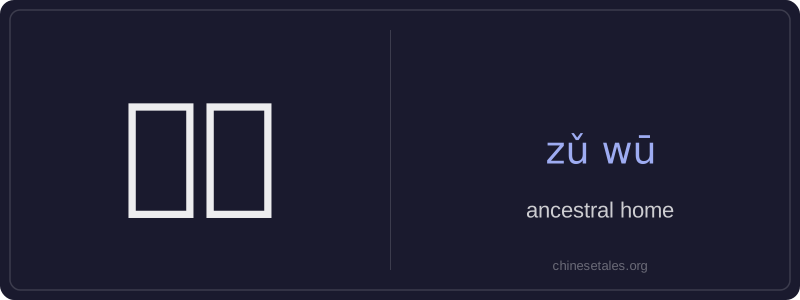
"Zǔ wū" literally means "ancestral house" — combining 祖 (zǔ), meaning "ancestor" or "forefather," and 屋 (wū), meaning "house" or "dwelling." It refers specifically to the original family home passed down through generations, often located in a clan's ancestral village. Unlike ordinary homes, a 祖屋 carries deep cultural and emotional significance: it may house ancestral tablets, host seasonal rituals like Qingming tomb-sweeping, or serve as a symbolic center for family reunions.
This term emphasizes lineage, continuity, and rootedness — not just physical structure but inherited identity. It is commonly used in narratives about migration (e.g., overseas Chinese returning to their 祖屋), heritage preservation efforts, or legal discussions about rural property rights. While similar to "hometown," 祖屋 is narrower and more precise: it denotes a specific building tied to one’s paternal lineage, not merely the place where one grew up.
Example Sentences
Related Words
国语
‘Guó yǔ’ literally means 'national language'—
无论谁
‘无论谁’ (wú lùn shéi) is a pronoun meaning
外语
‘外语’ literally means ‘outside language’ —
面条
‘面条’ (miàn tiáo) literally means ‘flour str
不对
不对 (bù duì) literally combines 不 (bù), meani
认为
‘认为’ (rèn wéi) is a transitive verb meaning
认同
‘认同’ (tóng rèn) is a verb meaning ‘to ident
中学
'Zhōngxué' literally combines 'zhōng' (middle)