Word Explanation
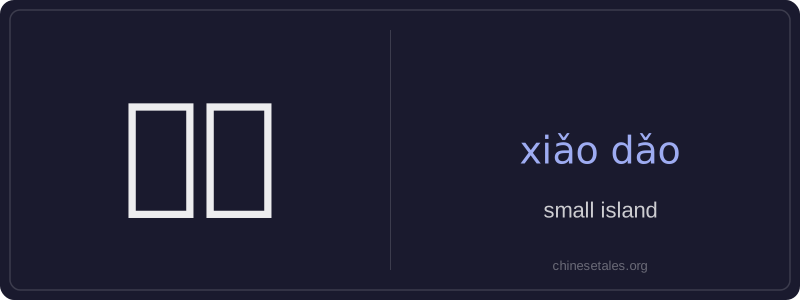
‘小岛’ literally means ‘small island’ — it combines 小 (xiǎo), meaning ‘small’ or ‘little’, and 岛 (dǎo), meaning ‘island’. Together, they refer to a relatively small landmass surrounded by water, typically smaller than a major island but larger than a rock or reef. Unlike the more formal or geographical term 岛屿 (dǎo yǔ), 小岛 carries a gentler, often picturesque or poetic connotation — evoking images of quiet, secluded, or scenic islands, sometimes inhabited or used for tourism, conservation, or leisure.
This word appears frequently in travel writing, literature, geography lessons, and everyday descriptions of coastal or marine environments. It’s commonly used in compound phrases like 小岛风光 (scenery of a small island) or 海上小岛 (a small island at sea). While it can refer to any small island regardless of size, it rarely implies political or administrative significance — that sense belongs to terms like 岛 (dǎo) alone or 岛国 (island nation).
Example Sentences
Related Words
国语
‘Guó yǔ’ literally means 'national language'—
无论谁
‘无论谁’ (wú lùn shéi) is a pronoun meaning
外语
‘外语’ literally means ‘outside language’ —
面条
‘面条’ (miàn tiáo) literally means ‘flour str
不对
不对 (bù duì) literally combines 不 (bù), meani
认为
‘认为’ (rèn wéi) is a transitive verb meaning
认同
‘认同’ (tóng rèn) is a verb meaning ‘to ident
中学
'Zhōngxué' literally combines 'zhōng' (middle)