Word Explanation
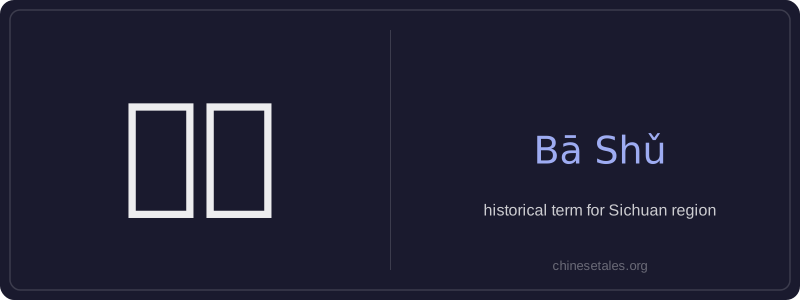
‘巴蜀’ (Bā Shǔ) is a classical Chinese term referring collectively to the ancient states of Ba and Shu, located in what is now Sichuan Province and the Chongqing municipality. ‘巴’ originally denoted a people and kingdom in the eastern Sichuan Basin and the Three Gorges area, while ‘蜀’ referred to the more western, agriculturally rich Chengdu Plain region—home to the ancient Shu Kingdom and later the Shu Han state during the Three Kingdoms period.
Today, ‘巴蜀’ is used mainly in historical, cultural, and literary contexts to evoke the shared geography, dialect, cuisine, and traditions of this distinctive southwestern region. It appears frequently in poetry, academic writing, tourism promotion, and discussions of regional identity—never in casual daily speech. The term carries connotations of natural beauty, resilience, and cultural uniqueness, often contrasted with central or northern Chinese traditions.
Example Sentences
Related Words
国语
‘Guó yǔ’ literally means 'national language'—
无论谁
‘无论谁’ (wú lùn shéi) is a pronoun meaning
外语
‘外语’ literally means ‘outside language’ —
面条
‘面条’ (miàn tiáo) literally means ‘flour str
不对
不对 (bù duì) literally combines 不 (bù), meani
认为
‘认为’ (rèn wéi) is a transitive verb meaning
认同
‘认同’ (tóng rèn) is a verb meaning ‘to ident
中学
'Zhōngxué' literally combines 'zhōng' (middle)