Word Explanation
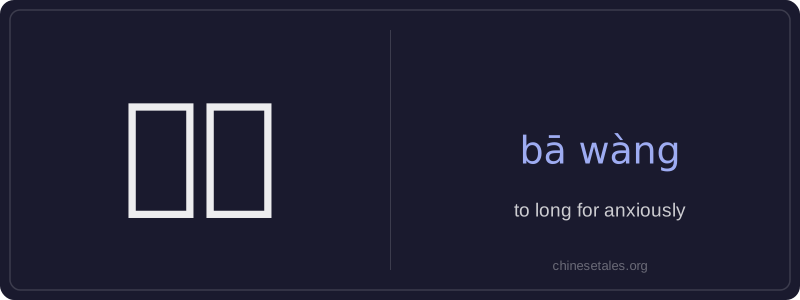
巴望 (bā wàng) is a verb meaning 'to long for anxiously' — it conveys strong, often impatient or even slightly desperate desire for something to happen or someone to arrive. The character 巴 originally meant 'to cling to' or 'to wait eagerly', while 望 means 'to look toward' or 'to hope'. Together, they evoke the image of someone straining their eyes and heart toward a desired outcome, like a child waiting at the window for a parent’s return.
This word carries emotional weight and implies tension or vulnerability — it’s not neutral longing, but yearning colored by impatience, worry, or helplessness. It’s commonly used in spoken and written Chinese, especially in narratives or dialogue expressing inner feelings. While it can appear in formal writing, it feels more natural in personal, literary, or emotionally rich contexts than in technical or bureaucratic language.
Example Sentences
Related Words
国语
‘Guó yǔ’ literally means 'national language'—
无论谁
‘无论谁’ (wú lùn shéi) is a pronoun meaning
外语
‘外语’ literally means ‘outside language’ —
面条
‘面条’ (miàn tiáo) literally means ‘flour str
不对
不对 (bù duì) literally combines 不 (bù), meani
认为
‘认为’ (rèn wéi) is a transitive verb meaning
认同
‘认同’ (tóng rèn) is a verb meaning ‘to ident
中学
'Zhōngxué' literally combines 'zhōng' (middle)