Word Explanation
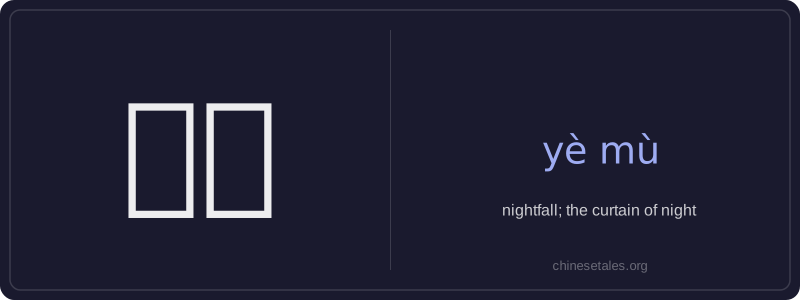
‘夜幕’ literally means ‘night curtain’—a poetic, vivid metaphor for the gradual descent of darkness at dusk. The character 夜 (yè) means ‘night’, while 幕 (mù) means ‘curtain’ or ‘screen’, evoking the image of night slowly drawing shut like a theater curtain. This term is not used for literal curtains or physical objects, but exclusively to describe the atmospheric transition from day to night.
It appears frequently in descriptive writing—literature, news reports, travel blogs—and carries a calm, sometimes solemn or romantic tone. It’s more literary than conversational; you’ll rarely hear it in casual speech (where people say 天黑了 or 黄昏 instead). It often pairs with verbs like 降临 (jiànglín, ‘to descend’), 拉开 (lākāi, ‘to draw open’), or 垂下 (chuíxià, ‘to lower’), reinforcing its visual, theatrical quality.
Example Sentences
Related Words
国语
‘Guó yǔ’ literally means 'national language'—
无论谁
‘无论谁’ (wú lùn shéi) is a pronoun meaning
外语
‘外语’ literally means ‘outside language’ —
面条
‘面条’ (miàn tiáo) literally means ‘flour str
不对
不对 (bù duì) literally combines 不 (bù), meani
认为
‘认为’ (rèn wéi) is a transitive verb meaning
认同
‘认同’ (tóng rèn) is a verb meaning ‘to ident
中学
'Zhōngxué' literally combines 'zhōng' (middle)