Word Explanation
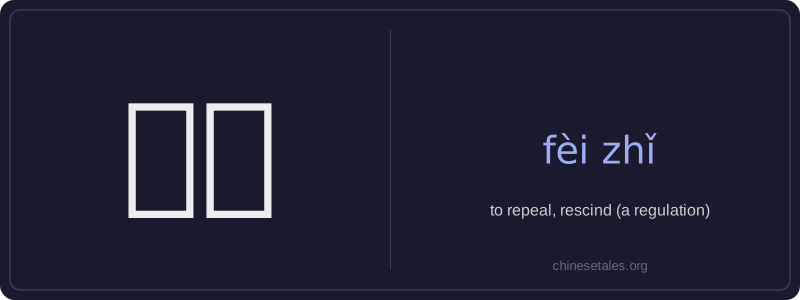
废止 (fèi zhǐ) is a formal verb meaning 'to repeal' or 'to rescind', especially used for laws, regulations, rules, or official policies that are officially canceled or abolished. The character 废 (fèi) means 'to discard', 'to abandon', or 'to render invalid', while 止 (zhǐ) means 'to stop' or 'to cease'. Together, they convey the idea of definitively ending something’s legal or official effect — not merely suspending it, but nullifying it entirely.
This term appears frequently in government announcements, legal documents, and news reports about policy changes. It carries strong bureaucratic and authoritative connotations and is rarely used in casual speech or for personal matters. Unlike synonyms like 取消 (qǔxiāo), which can mean 'to cancel' in everyday contexts (e.g., a meeting), 废止 is reserved for institutional, statutory, or systemic cancellation — such as abolishing outdated health regulations or outdated examination requirements.
Example Sentences
Related Words
国语
‘Guó yǔ’ literally means 'national language'—
无论谁
‘无论谁’ (wú lùn shéi) is a pronoun meaning
外语
‘外语’ literally means ‘outside language’ —
面条
‘面条’ (miàn tiáo) literally means ‘flour str
不对
不对 (bù duì) literally combines 不 (bù), meani
认为
‘认为’ (rèn wéi) is a transitive verb meaning
认同
‘认同’ (tóng rèn) is a verb meaning ‘to ident
中学
'Zhōngxué' literally combines 'zhōng' (middle)