Word Explanation
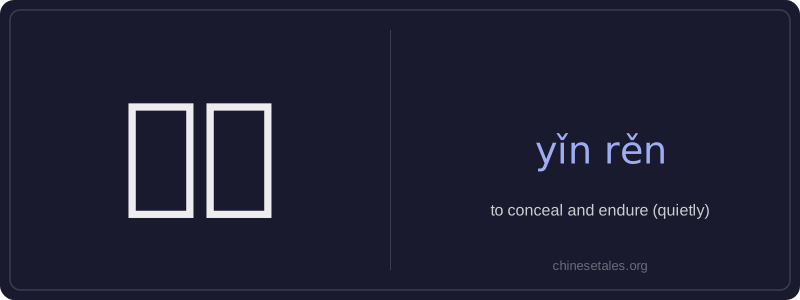
隐忍 means 'to conceal and endure (quietly)' — a compound verb where 隐 (yǐn) means 'to hide, conceal, or keep secret', and 忍 (rěn) means 'to endure, bear, or suppress'. Together, they describe the act of inwardly suppressing strong feelings — such as anger, grief, or injustice — without outward expression, often for strategic, moral, or relational reasons. It implies patience, self-restraint, and emotional discipline, not passive weakness.
This word carries a slightly literary or formal tone and is common in written Chinese, historical narratives, and serious discussions about personal conduct or social dynamics. It’s often used to describe admirable resilience — for example, someone enduring hardship silently to protect others or await a better moment to act. Unlike simple endurance (忍受), 隐忍 emphasizes the conscious choice to conceal one’s inner state while bearing difficulty.
Example Sentences
Related Words
国语
‘Guó yǔ’ literally means 'national language'—
无论谁
‘无论谁’ (wú lùn shéi) is a pronoun meaning
外语
‘外语’ literally means ‘outside language’ —
面条
‘面条’ (miàn tiáo) literally means ‘flour str
不对
不对 (bù duì) literally combines 不 (bù), meani
认为
‘认为’ (rèn wéi) is a transitive verb meaning
认同
‘认同’ (tóng rèn) is a verb meaning ‘to ident
中学
'Zhōngxué' literally combines 'zhōng' (middle)