Word Explanation
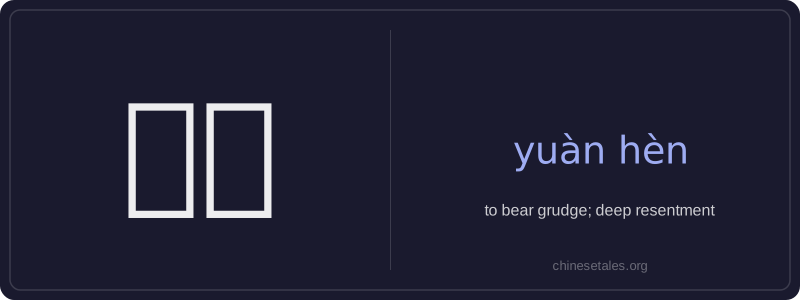
怨恨 (yuàn hèn) is a compound word expressing deep, lasting resentment — stronger than ordinary dissatisfaction or annoyance. The first character 怨 means 'to blame' or 'to feel wronged', often carrying a sense of grievance toward someone who has treated one unfairly. The second character 恨 means 'to hate' or 'to deeply resent', emphasizing emotional intensity and enduring hostility. Together, 怨恨 conveys a bitter, grudge-holding state of mind — not just momentary anger, but a settled, often simmering ill will that may persist for years.
This word is commonly used in formal writing, literature, and serious conversation to describe profound interpersonal conflict — such as between estranged family members, historical enemies, or victims and perpetrators. It rarely appears in light or casual speech; instead, it signals gravity and emotional weight. While both characters can stand alone (e.g., 怨气 'grievance', 恨意 'hatred'), the compound 怨恨 is more emphatic and cohesive, functioning as a single lexical unit with noun and verb uses.
Example Sentences
Related Words
国语
‘Guó yǔ’ literally means 'national language'—
无论谁
‘无论谁’ (wú lùn shéi) is a pronoun meaning
外语
‘外语’ literally means ‘outside language’ —
面条
‘面条’ (miàn tiáo) literally means ‘flour str
不对
不对 (bù duì) literally combines 不 (bù), meani
认为
‘认为’ (rèn wéi) is a transitive verb meaning
认同
‘认同’ (tóng rèn) is a verb meaning ‘to ident
中学
'Zhōngxué' literally combines 'zhōng' (middle)