Word Explanation
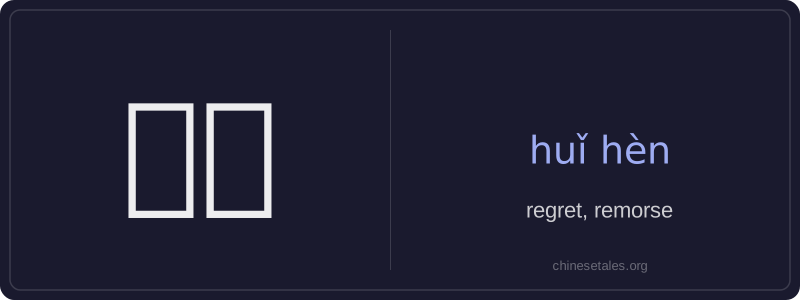
悔恨 is a compound noun meaning deep, painful regret—often for something one has done wrong or failed to do. It combines 悔 (huǐ), meaning 'to regret' or 'to repent', and 恨 (hèn), meaning 'to hate' or 'to feel intense resentment'; together, they express sorrow fused with self-directed anger or bitterness. Unlike simple regret (后悔), 悔恨 carries stronger emotional weight and moral gravity, suggesting lingering anguish and self-reproach.
This word appears frequently in literature, formal speech, and reflective contexts—such as personal confessions, historical reflections, or psychological descriptions. It is rarely used in casual daily conversation; instead, it conveys solemnity and depth of feeling. Speakers often pair it with verbs like 感到 (feel), 充满 (be filled with), or 留下 (leave behind), and it commonly modifies nouns like 痛苦 (pain) or 记忆 (memory). It reflects an internalized, enduring emotional state rather than a fleeting reaction.
Example Sentences
Related Words
国语
‘Guó yǔ’ literally means 'national language'—
无论谁
‘无论谁’ (wú lùn shéi) is a pronoun meaning
外语
‘外语’ literally means ‘outside language’ —
面条
‘面条’ (miàn tiáo) literally means ‘flour str
不对
不对 (bù duì) literally combines 不 (bù), meani
认为
‘认为’ (rèn wéi) is a transitive verb meaning
认同
‘认同’ (tóng rèn) is a verb meaning ‘to ident
中学
'Zhōngxué' literally combines 'zhōng' (middle)