Word Explanation
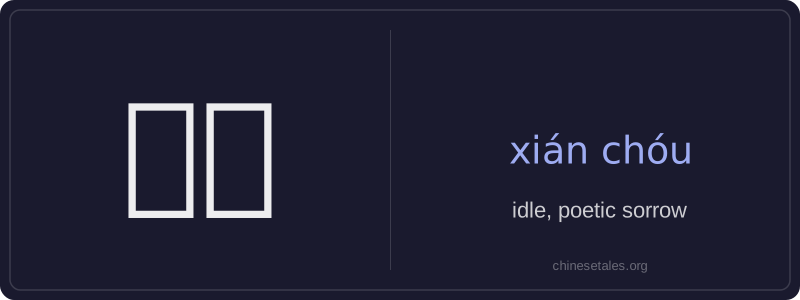
'Xián chóu' literally combines 'xián' (leisure, idle, unoccupied) and 'chóu' (sorrow, melancholy, sorrowful feeling). It describes a gentle, reflective, almost aesthetic kind of sadness — not born of crisis or hardship, but arising during moments of quiet, stillness, or solitude. This is the wistful mood poets often evoke: watching falling leaves, gazing at a moonlit river, or sitting alone after dusk. It carries literary elegance and emotional subtlety, implying a sorrow that is self-aware, voluntary, and even cherished for its depth and beauty.
The term appears frequently in classical poetry and modern literary prose, especially when evoking nostalgia, fleeting time, unspoken longing, or the bittersweetness of tranquility. Unlike raw grief or anxiety, 'xián chóu' is soft-edged, contemplative, and culturally resonant — it reflects a distinctly Chinese aesthetic sensibility where emotion and environment intertwine harmoniously.
Example Sentences
Related Words
国语
‘Guó yǔ’ literally means 'national language'—
无论谁
‘无论谁’ (wú lùn shéi) is a pronoun meaning
外语
‘外语’ literally means ‘outside language’ —
面条
‘面条’ (miàn tiáo) literally means ‘flour str
不对
不对 (bù duì) literally combines 不 (bù), meani
认为
‘认为’ (rèn wéi) is a transitive verb meaning
认同
‘认同’ (tóng rèn) is a verb meaning ‘to ident
中学
'Zhōngxué' literally combines 'zhōng' (middle)