Word Explanation
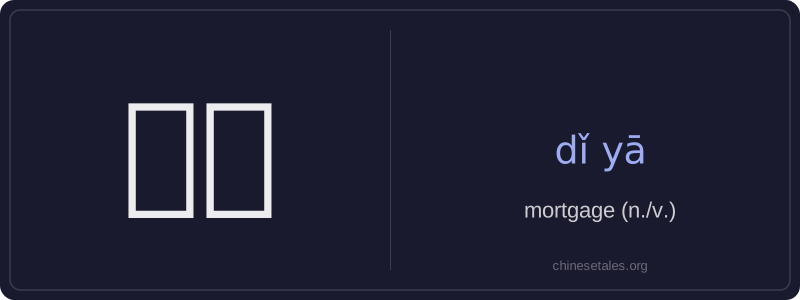
'Mortgage' is a financial arrangement where property (like a house or land) is pledged as security for a loan. The character 抵 (dǐ) means 'to offset', 'to counteract', or 'to resist', suggesting the use of an asset to cover or guarantee debt. The character 押 (yā) means 'to pledge', 'to deposit', or 'to hold as security' — it’s the same character used in words like 押金 (yājīn, 'deposit'). Together, 抵押 conveys the idea of using valuable property as collateral: the borrower 'offsets' potential default risk by 'pledging' ownership rights to the lender until the loan is repaid.
This term is common in real estate, banking, and legal contexts in Chinese-speaking regions. While it functions as both a noun ('a mortgage') and a verb ('to mortgage'), it almost always involves immovable property — homes, apartments, or commercial buildings — though occasionally high-value movable assets like vehicles or equipment may also be 抵押. It differs from 租赁 (zūlìn, 'leasing') or 购买 (gòumǎi, 'purchasing') because ownership remains with the borrower, but legal rights are temporarily transferred to secure repayment.
Example Sentences
Related Words
国语
‘Guó yǔ’ literally means 'national language'—
无论谁
‘无论谁’ (wú lùn shéi) is a pronoun meaning
外语
‘外语’ literally means ‘outside language’ —
面条
‘面条’ (miàn tiáo) literally means ‘flour str
不对
不对 (bù duì) literally combines 不 (bù), meani
认为
‘认为’ (rèn wéi) is a transitive verb meaning
认同
‘认同’ (tóng rèn) is a verb meaning ‘to ident
违规
违规 (wéi guī) literally means 'to violate rules