Word Explanation
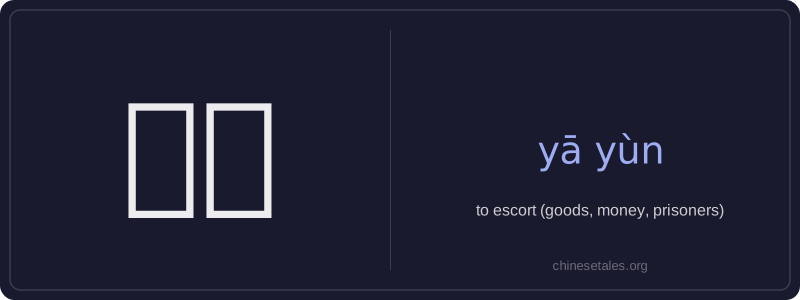
押运 (yā yùn) is a compound verb meaning 'to escort'—specifically referring to the secure, supervised transportation of valuable or sensitive items such as cash, goods, prisoners, or hazardous materials. The first character 押 (yā) means 'to detain', 'to pledge', or 'to supervise closely', implying control and oversight; the second character 运 (yùn) means 'to transport' or 'to carry'. Together, they emphasize both security and movement—highlighting that the escort is not passive but involves active monitoring and protection throughout transit.
This term is commonly used in formal, institutional, or professional contexts: banks hire armed guards for cash押运, logistics companies use it for high-value cargo, and law enforcement applies it when moving detainees between facilities. It carries connotations of authority, responsibility, and risk management—not used for casual or personal deliveries. While 押运 can refer to people (e.g., prisoners), its core focus remains on safeguarding the escorted object or person during transport.
Example Sentences
Related Words
国语
‘Guó yǔ’ literally means 'national language'—
无论谁
‘无论谁’ (wú lùn shéi) is a pronoun meaning
外语
‘外语’ literally means ‘outside language’ —
面条
‘面条’ (miàn tiáo) literally means ‘flour str
不对
不对 (bù duì) literally combines 不 (bù), meani
认为
‘认为’ (rèn wéi) is a transitive verb meaning
认同
‘认同’ (tóng rèn) is a verb meaning ‘to ident
违规
违规 (wéi guī) literally means 'to violate rules