Word Explanation
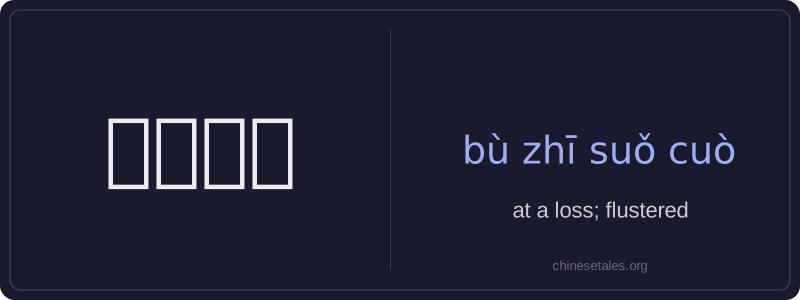
‘不知所措’ literally means ‘does not know where to place (oneself)’ — a classical expression that vividly conveys the feeling of being mentally overwhelmed and unable to decide what to do next. The four characters combine to form an idiom: 不 (not) + 知 (know) + 所 (a marker for places or actions, here implying ‘where’ or ‘how’) + 措 (to place, handle, or deal with). It describes a state of flustered confusion, often triggered by sudden, unexpected, or emotionally charged situations.
This adjective is commonly used in both spoken and written Chinese, especially when describing reactions to surprises, crises, or social awkwardness — such as receiving shocking news, facing public criticism, or encountering an unfamiliar cultural norm. Though it carries a slightly literary tone, it remains widely understood and appropriate in everyday conversation among educated speakers. It functions predicatively (e.g., ‘他不知所措了’) and is rarely used attributively without additional phrasing like ‘不知所措的样子’.
Example Sentences
Related Words
国语
‘Guó yǔ’ literally means 'national language'—
无论谁
‘无论谁’ (wú lùn shéi) is a pronoun meaning
外语
‘外语’ literally means ‘outside language’ —
面条
‘面条’ (miàn tiáo) literally means ‘flour str
不对
不对 (bù duì) literally combines 不 (bù), meani
认为
‘认为’ (rèn wéi) is a transitive verb meaning
认同
‘认同’ (tóng rèn) is a verb meaning ‘to ident
违规
违规 (wéi guī) literally means 'to violate rules