Word Explanation
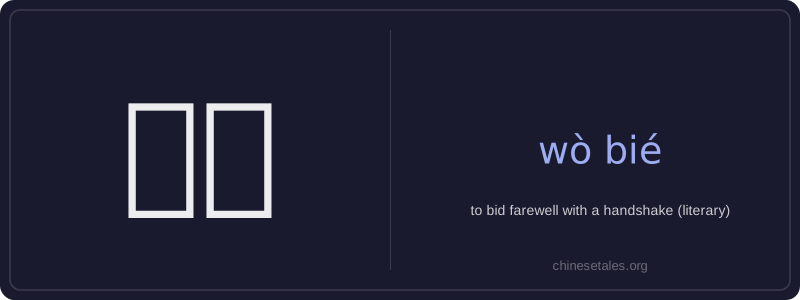
‘握别’ literally means ‘to grasp (hand) and part’ — combining 握 (wò), meaning ‘to grip’ or ‘to shake hands’, and 别 (bié), meaning ‘to separate’ or ‘to bid farewell’. It describes the formal, often emotionally resonant act of saying goodbye by shaking hands, typically in literary, poetic, or solemn contexts such as farewells between friends, colleagues, or diplomats. Unlike the neutral ‘告别’ (gàobié) or colloquial ‘拜拜’ (bàibài), ‘握别’ evokes dignity, respect, and quiet emotion — it’s rarely used in casual speech.
This compound is a verb that usually appears as a predicate or in descriptive phrases (e.g., ‘紧紧握别’, ‘含泪握别’). It emphasizes physical contact as a symbolic gesture of connection before separation, and is common in written Chinese — novels, speeches, news reports, and commemorative writing — but uncommon in daily conversation or informal texts.
Example Sentences
Related Words
国语
‘Guó yǔ’ literally means 'national language'—
无论谁
‘无论谁’ (wú lùn shéi) is a pronoun meaning
外语
‘外语’ literally means ‘outside language’ —
面条
‘面条’ (miàn tiáo) literally means ‘flour str
不对
不对 (bù duì) literally combines 不 (bù), meani
认为
‘认为’ (rèn wéi) is a transitive verb meaning
认同
‘认同’ (tóng rèn) is a verb meaning ‘to ident
违规
违规 (wéi guī) literally means 'to violate rules