Word Explanation
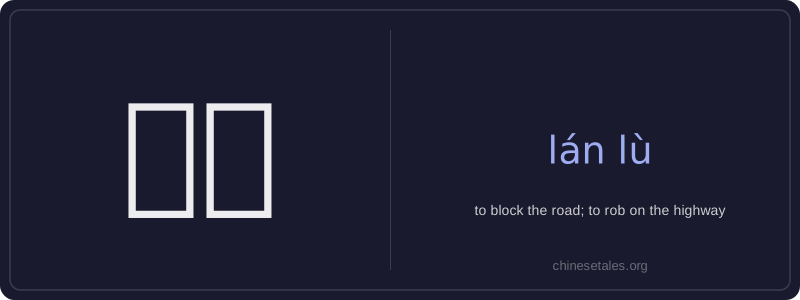
拦路 literally means 'to block the road' — combining 拦 (lán), meaning 'to stop, obstruct, or intercept', and 路 (lù), meaning 'road' or 'path'. As a verb, it describes physically blocking someone’s passage on a street, path, or highway. Historically and in literature, it often carries a negative connotation, evoking images of bandits stopping travelers to rob them — hence the secondary meaning 'to rob on the highway'.
In modern usage, 拦路 appears in both literal and figurative contexts: police may 拦路 check IDs; protesters might 拦路 express dissent; and news reports sometimes describe criminals 拦路抢劫 (robbing people on the street). While it can describe non-criminal obstruction (e.g., construction barriers), context usually signals intent — neutral or hostile. It’s typically used in written Chinese and formal speech, less common in casual daily conversation.
Example Sentences
Related Words
国语
‘Guó yǔ’ literally means 'national language'—
无论谁
‘无论谁’ (wú lùn shéi) is a pronoun meaning
外语
‘外语’ literally means ‘outside language’ —
面条
‘面条’ (miàn tiáo) literally means ‘flour str
不对
不对 (bù duì) literally combines 不 (bù), meani
认为
‘认为’ (rèn wéi) is a transitive verb meaning
认同
‘认同’ (tóng rèn) is a verb meaning ‘to ident
违规
违规 (wéi guī) literally means 'to violate rules