Word Explanation
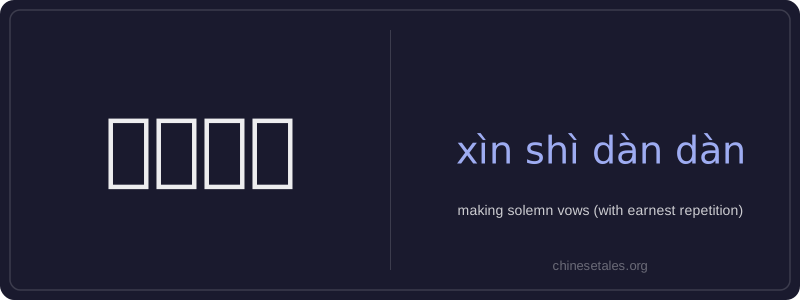
‘信誓旦旦’ is an idiom describing someone making solemn, earnest, and repeated vows—often with great confidence and apparent sincerity. The four characters combine to reinforce the idea of unwavering commitment: ‘信’ means ‘trust’ or ‘faith,’ ‘誓’ means ‘oath’ or ‘vow,’ and ‘旦旦’ (repeated) evokes the rising sun—symbolizing clarity, constancy, and daily renewal of promise. Historically, it appears in the Classic of Poetry, where it described faithful oaths sworn at dawn.
While the phrase sounds deeply sincere, modern usage often carries irony or skepticism—especially when promises later prove hollow. It’s commonly used in storytelling, journalism, or everyday commentary to highlight the gap between confident declarations and actual behavior. Though grammatically adverbial (modifying verbs like ‘promise,’ ‘swear,’ or ‘claim’), it frequently appears as a predicate or subject complement, especially after verbs like ‘said’ or ‘claimed.’
Example Sentences
Related Words
国语
‘Guó yǔ’ literally means 'national language'—
无论谁
‘无论谁’ (wú lùn shéi) is a pronoun meaning
外语
‘外语’ literally means ‘outside language’ —
面条
‘面条’ (miàn tiáo) literally means ‘flour str
不对
不对 (bù duì) literally combines 不 (bù), meani
认为
‘认为’ (rèn wéi) is a transitive verb meaning
认同
‘认同’ (tóng rèn) is a verb meaning ‘to ident
违规
违规 (wéi guī) literally means 'to violate rules