Word Explanation
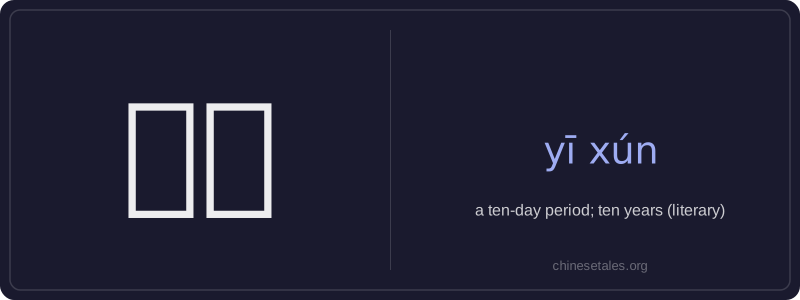
‘一旬’ literally means ‘one xún’, where ‘一’ is the numeral ‘one’ and ‘旬’ is an ancient Chinese unit of time equal to ten days. Historically, the lunar month was divided into three xún: the first (shàngxún), middle (zhōngxún), and last (xiàxún) ten-day periods. This usage remains common in formal writing, weather reports, and agricultural or administrative contexts when referring to short-term time spans.
In literary or historical contexts, ‘旬’ can also mean ‘ten years’, so ‘一旬’ may occasionally signify a decade—especially in poetic or biographical language (e.g., ‘年过七旬’ meaning ‘over seventy years old’). However, this decade sense is almost always used with age or lifespan and rarely stands alone without context. The ten-day meaning is by far the dominant and most practical usage for learners.
Example Sentences
Related Words
国语
‘Guó yǔ’ literally means 'national language'—
无论谁
‘无论谁’ (wú lùn shéi) is a pronoun meaning
外语
‘外语’ literally means ‘outside language’ —
面条
‘面条’ (miàn tiáo) literally means ‘flour str
不对
不对 (bù duì) literally combines 不 (bù), meani
认为
‘认为’ (rèn wéi) is a transitive verb meaning
认同
‘认同’ (tóng rèn) is a verb meaning ‘to ident
违规
违规 (wéi guī) literally means 'to violate rules