Word Explanation
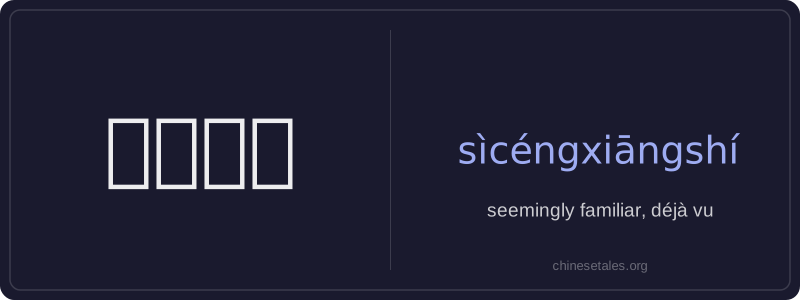
'似曾相识' literally means 'seemingly have met before' — each character contributes: 似 (seems like), 曾 (already, once), 相 (mutually, each other), and 识 (to know, to recognize). Together, they express the uncanny feeling that a current experience — a place, face, phrase, or sensation — is strangely familiar despite no conscious memory of encountering it before. It captures the psychological phenomenon of déjà vu, often evoking wonder, nostalgia, or mild disorientation.
This phrase is commonly used in literary, reflective, or introspective contexts — in novels, essays, poetry, or thoughtful conversation — rather than casual speech. It carries a poetic, slightly melancholic or philosophical tone. While grammatically flexible (functioning as a noun or adjective), it typically modifies nouns ('似曾相识的感觉') or serves as a predicate ('这场景似曾相识'). It’s rarely used in technical or bureaucratic language, and almost never in commands or directives.
Example Sentences
Related Words
国语
‘Guó yǔ’ literally means 'national language'—
无论谁
‘无论谁’ (wú lùn shéi) is a pronoun meaning
外语
‘外语’ literally means ‘outside language’ —
面条
‘面条’ (miàn tiáo) literally means ‘flour str
不对
不对 (bù duì) literally combines 不 (bù), meani
认为
‘认为’ (rèn wéi) is a transitive verb meaning
认同
‘认同’ (tóng rèn) is a verb meaning ‘to ident
违规
违规 (wéi guī) literally means 'to violate rules