Word Explanation
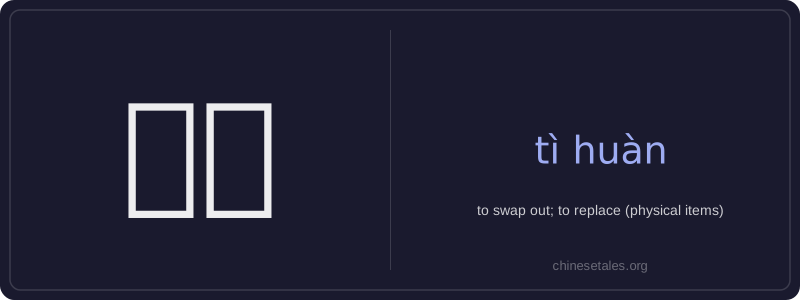
替换 (tì huàn) is a verb meaning 'to swap out' or 'to replace'—especially when exchanging one physical object for another, often to restore function, update, or maintain something. The first character 替 (tì) conveys the idea of 'substituting' or 'standing in for', while 换 (huàn) means 'to exchange' or 'to change'. Together, they emphasize a deliberate, action-oriented replacement of one item with another, typically in practical, everyday contexts like maintenance, repairs, or upgrades.
This word is commonly used in instructions, technical manuals, and daily conversations about fixing or updating things—such as replacing a broken part, changing batteries, or swapping old equipment. It implies intentionality and equivalence: the new item usually serves the same purpose as the old one. Unlike 把…换掉 (bǎ…huàn diào), which is more colloquial and can imply discarding, 替换 carries a neutral-to-formal tone and focuses on the substitution itself rather than disposal.
Example Sentences
Related Words
国语
‘Guó yǔ’ literally means 'national language'—
无论谁
‘无论谁’ (wú lùn shéi) is a pronoun meaning
外语
‘外语’ literally means ‘outside language’ —
面条
‘面条’ (miàn tiáo) literally means ‘flour str
不对
不对 (bù duì) literally combines 不 (bù), meani
认为
‘认为’ (rèn wéi) is a transitive verb meaning
认同
‘认同’ (tóng rèn) is a verb meaning ‘to ident
违规
违规 (wéi guī) literally means 'to violate rules