Word Explanation
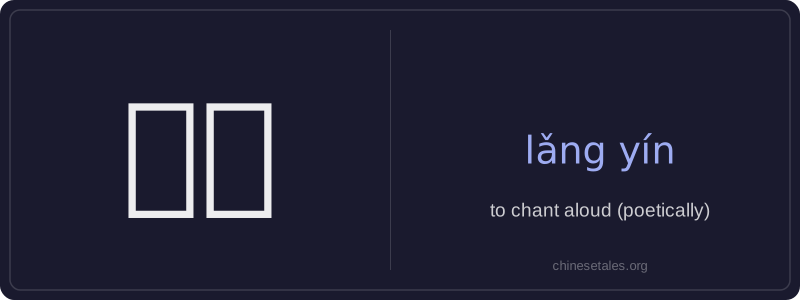
‘朗吟’ is a literary verb meaning 'to chant aloud'—especially poetry, classical texts, or lyrical passages—in a clear, resonant, and expressive voice. The first character, 朗 (lǎng), conveys brightness, clarity, and resonance; the second, 吟 (yín), means 'to chant' or 'to recite poetically,' often with musicality and emotional depth. Together, they evoke a refined, deliberate vocal performance—not mere reading, but an artful, sonorous utterance that emphasizes rhythm, tone, and feeling.
This term appears frequently in classical Chinese literature, historical descriptions of scholars or poets, and modern contexts evoking traditional culture—such as garden poetry gatherings, mountain retreats, or cultural festivals. It carries a formal, elegant register and is rarely used in casual speech. While it can describe chanting in nature (e.g., beside bamboo groves or streams), its core sense is aesthetic and performative, rooted in literati tradition rather than religious or ritual practice.
Example Sentences
Related Words
国语
‘Guó yǔ’ literally means 'national language'—
无论谁
‘无论谁’ (wú lùn shéi) is a pronoun meaning
外语
‘外语’ literally means ‘outside language’ —
面条
‘面条’ (miàn tiáo) literally means ‘flour str
不对
不对 (bù duì) literally combines 不 (bù), meani
认为
‘认为’ (rèn wéi) is a transitive verb meaning
认同
‘认同’ (tóng rèn) is a verb meaning ‘to ident
违规
违规 (wéi guī) literally means 'to violate rules