Word Explanation
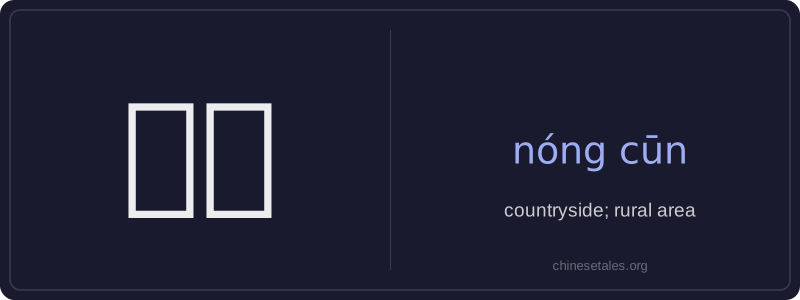
农村 (nóng cūn) literally combines 农 (nóng), meaning 'agriculture' or 'farming', and 村 (cūn), meaning 'village'. Together, it refers to rural areas—settlements outside cities where farming, animal husbandry, and traditional livelihoods are common. It emphasizes geographic and socioeconomic contrast with urban centers, often evoking images of fields, small villages, and close-knit communities.
The term is neutral and widely used in official, academic, and everyday contexts—such as government policy (e.g., rural revitalization), news reports, and personal descriptions. It’s not limited to purely agricultural land; it includes villages and towns with low population density and non-industrial economies. Unlike the more poetic or literary term 乡下 (xiāng xia), 农村 carries a slightly formal, structural connotation, frequently appearing in statistics, planning documents, and sociological discussions about China’s urban-rural divide.
Example Sentences
Related Words
国语
‘Guó yǔ’ literally means 'national language'—
无论谁
‘无论谁’ (wú lùn shéi) is a pronoun meaning
外语
‘外语’ literally means ‘outside language’ —
面条
‘面条’ (miàn tiáo) literally means ‘flour str
不对
不对 (bù duì) literally combines 不 (bù), meani
认为
‘认为’ (rèn wéi) is a transitive verb meaning
认同
‘认同’ (tóng rèn) is a verb meaning ‘to ident
违规
违规 (wéi guī) literally means 'to violate rules