Word Explanation
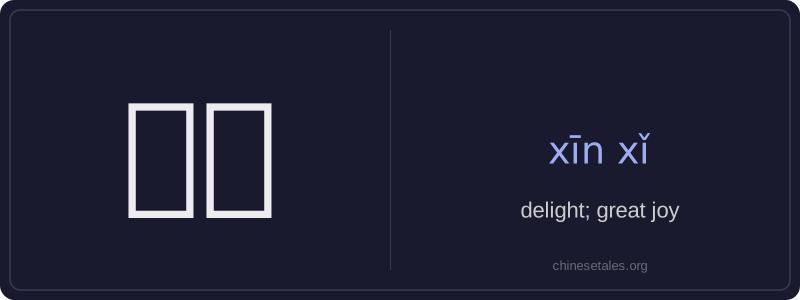
欣喜 is a compound word formed by combining two characters that both mean 'joy' or 'pleasure': 欣 (xīn) conveys a sense of delight, often in response to something favorable or uplifting, while 喜 (xǐ) means 'happiness' or 'rejoicing' — as in the common word 喜欢 (xǐhuān, 'to like'). Together, 欣喜 intensifies the feeling, expressing deep, heartfelt joy — warmer and more personal than neutral terms like 高兴 (gāoxìng). It’s frequently used in written Chinese and formal speech, especially when describing emotional reactions to good news, achievements, or meaningful encounters.
This word carries a gentle, sincere tone — not boisterous excitement, but quiet elation. You’ll often see it after verbs like 感到 (gǎndào, 'to feel'), 表达 (biǎodá, 'to express'), or 见到 (jiàndào, 'to see'), and it commonly modifies nouns like 心情 (xīnqíng, 'mood') or 神情 (shénqíng, 'expression'). It’s rarely used alone as a sentence; instead, it functions descriptively or predicatively within larger phrases.
Example Sentences
Related Words
国语
‘Guó yǔ’ literally means 'national language'—
无论谁
‘无论谁’ (wú lùn shéi) is a pronoun meaning
外语
‘外语’ literally means ‘outside language’ —
面条
‘面条’ (miàn tiáo) literally means ‘flour str
认同
‘认同’ (tóng rèn) is a verb meaning ‘to ident
不对
不对 (bù duì) literally combines 不 (bù), meani
认为
‘认为’ (rèn wéi) is a transitive verb meaning
违规
违规 (wéi guī) literally means 'to violate rules