Word Explanation
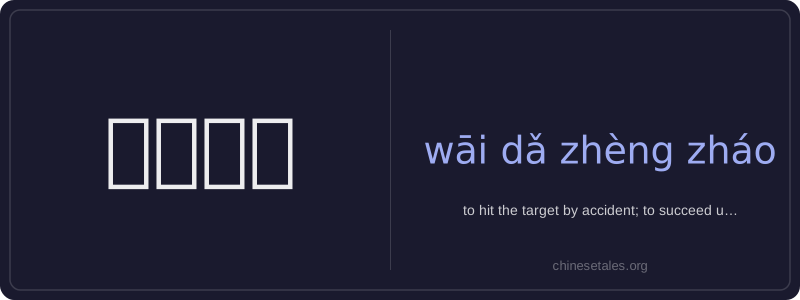
'歪打正着' is a four-character idiom that literally means 'to strike crookedly but hit the target correctly.' The characters combine to convey an accidental success: 歪 (wāi) means 'crooked' or 'off-target,' 打 (dǎ) means 'to strike' or 'to aim,' 正 (zhèng) means 'correct' or 'right on target,' and 着 (zháo) is a verb complement meaning 'to hit' or 'to achieve.' Together, they describe situations where someone achieves a good result not through skill or planning, but purely by chance.
This idiom is commonly used in everyday spoken and written Chinese to describe lucky accidents — like solving a problem with a wrong method, or achieving a goal while trying to do something else entirely. It carries a light, often humorous or self-deprecating tone, implying modesty about one’s success. It's not used for serious or dangerous outcomes, but rather harmless, positive surprises in work, study, cooking, or social interactions.
Example Sentences
Related Words
国语
‘Guó yǔ’ literally means 'national language'—
无论谁
‘无论谁’ (wú lùn shéi) is a pronoun meaning
外语
‘外语’ literally means ‘outside language’ —
面条
‘面条’ (miàn tiáo) literally means ‘flour str
认同
‘认同’ (tóng rèn) is a verb meaning ‘to ident
不对
不对 (bù duì) literally combines 不 (bù), meani
认为
‘认为’ (rèn wéi) is a transitive verb meaning
违规
违规 (wéi guī) literally means 'to violate rules