Word Explanation
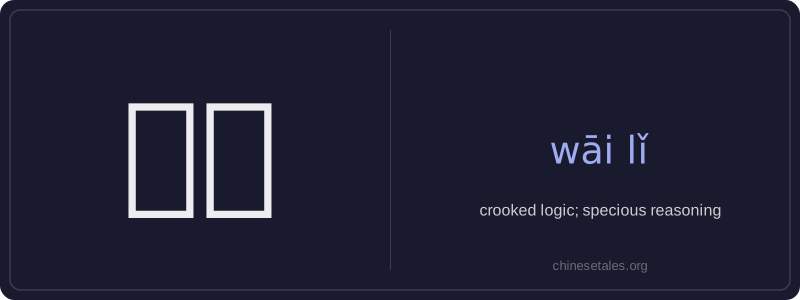
'歪理' literally combines 歪 (wāi), meaning 'crooked', 'askew', or 'distorted', and 理 (lǐ), meaning 'reason', 'principle', or 'logic'. Together, they form a noun describing reasoning that appears logical on the surface but is actually flawed, self-serving, dishonest, or illogical—like twisting facts to justify an unreasonable position. It carries a strong negative connotation and is often used in criticism or satire.
This term frequently appears in everyday arguments, online debates, or humorous commentary where someone defends an absurd claim with seemingly structured but fundamentally unsound logic. It’s not neutral jargon—it implies intentional distortion rather than mere misunderstanding. While related to fallacies in Western logic, 歪理 emphasizes moral or rhetorical dishonesty more than formal structure. Native speakers use it colloquially and dismissively, often with irony or exasperation, especially when confronting stubborn or manipulative reasoning.
Example Sentences
Related Words
国语
‘Guó yǔ’ literally means 'national language'—
无论谁
‘无论谁’ (wú lùn shéi) is a pronoun meaning
外语
‘外语’ literally means ‘outside language’ —
面条
‘面条’ (miàn tiáo) literally means ‘flour str
认同
‘认同’ (tóng rèn) is a verb meaning ‘to ident
不对
不对 (bù duì) literally combines 不 (bù), meani
认为
‘认为’ (rèn wéi) is a transitive verb meaning
违规
违规 (wéi guī) literally means 'to violate rules