Word Explanation
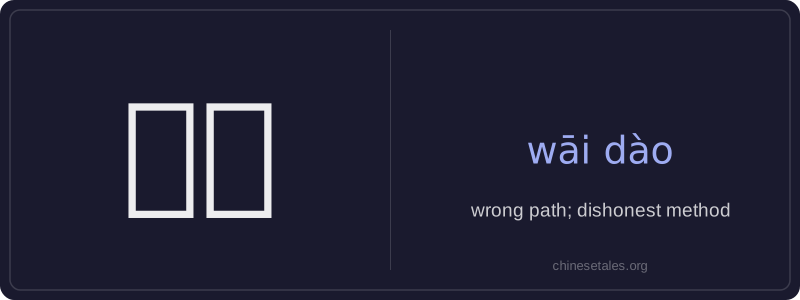
'歪道' literally combines '歪' (wāi), meaning 'crooked', 'askew', or 'deviant', and '道' (dào), meaning 'path', 'way', or 'method'. Together, it figuratively denotes a morally or logically unsound approach — not just physically crooked, but ethically or practically wrong. It carries strong negative connotation, implying deception, shortcuts that violate rules or fairness, or methods that undermine integrity.
The term is commonly used in warnings or criticism, especially in contexts involving ethics, education, business, or personal conduct. For example, teachers might caution students against taking '歪道' to pass exams, and journalists may condemn companies using '歪道' to boost profits. Unlike neutral synonyms like '方法' (fāngfǎ, 'method'), '歪道' always signals disapproval and implies deviation from accepted standards or principles.
Example Sentences
Related Words
国语
‘Guó yǔ’ literally means 'national language'—
无论谁
‘无论谁’ (wú lùn shéi) is a pronoun meaning
外语
‘外语’ literally means ‘outside language’ —
面条
‘面条’ (miàn tiáo) literally means ‘flour str
认同
‘认同’ (tóng rèn) is a verb meaning ‘to ident
不对
不对 (bù duì) literally combines 不 (bù), meani
认为
‘认为’ (rèn wéi) is a transitive verb meaning
违规
违规 (wéi guī) literally means 'to violate rules