Word Explanation
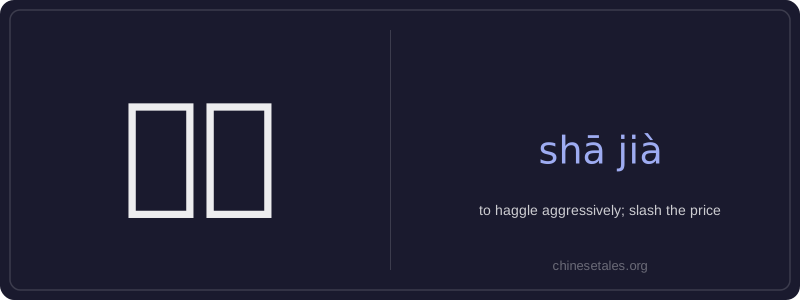
'杀价' literally combines '杀' (shā), meaning 'to kill' or 'to cut down drastically', and '价' (jià), meaning 'price'. Together, it metaphorically means to aggressively lower or slash a price during bargaining — like 'killing' the seller's original asking price. It implies strong negotiation tactics, often used in informal markets, street stalls, or secondhand transactions where fixed pricing is uncommon.
This verb is commonly used in spoken Chinese and carries a slightly assertive or even competitive connotation. While not rude per se, it suggests the buyer is determined to get the lowest possible price, sometimes at the expense of the seller’s margin. It’s rarely used in formal business settings or online shopping with fixed prices; instead, it belongs to face-to-face haggling culture — especially common in tourist bazaars, flea markets, or family-run shops in smaller cities.
Example Sentences
Related Words
国语
‘Guó yǔ’ literally means 'national language'—
无论谁
‘无论谁’ (wú lùn shéi) is a pronoun meaning
外语
‘外语’ literally means ‘outside language’ —
面条
‘面条’ (miàn tiáo) literally means ‘flour str
认同
‘认同’ (tóng rèn) is a verb meaning ‘to ident
不对
不对 (bù duì) literally combines 不 (bù), meani
认为
‘认为’ (rèn wéi) is a transitive verb meaning
违规
违规 (wéi guī) literally means 'to violate rules