Word Explanation
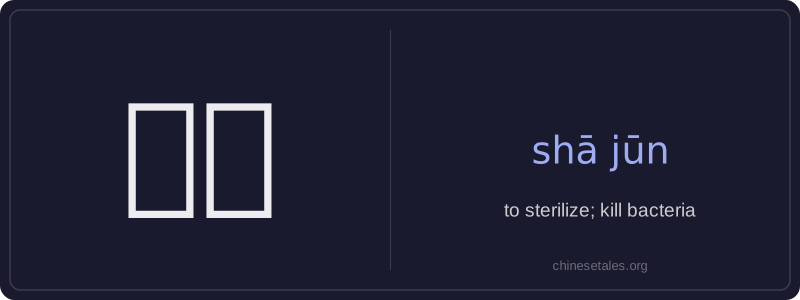
'杀菌' literally means 'kill bacteria'—'杀' (shā) means 'to kill' or 'to eliminate', and '菌' (jūn) refers to 'microorganisms', especially bacteria and fungi. Together, the term denotes the process of destroying harmful microbes on surfaces, in food, water, or medical instruments to prevent infection or spoilage.
This word is commonly used in health, hygiene, food safety, and medical contexts. It often appears in compound verbs like '杀菌消毒' (sterilize and disinfect) or as part of noun phrases such as '杀菌剂' (disinfectant). Unlike general cleaning, 杀菌 specifically targets living pathogens—not just dirt—and implies a scientifically effective method (e.g., boiling, UV light, alcohol, or chlorine). It's frequently seen on product labels (e.g., antibacterial soaps, sterilizing wands) and in public health guidance.
Example Sentences
Related Words
国语
‘Guó yǔ’ literally means 'national language'—
无论谁
‘无论谁’ (wú lùn shéi) is a pronoun meaning
外语
‘外语’ literally means ‘outside language’ —
面条
‘面条’ (miàn tiáo) literally means ‘flour str
认同
‘认同’ (tóng rèn) is a verb meaning ‘to ident
不对
不对 (bù duì) literally combines 不 (bù), meani
认为
‘认为’ (rèn wéi) is a transitive verb meaning
违规
违规 (wéi guī) literally means 'to violate rules